The dusty plains of West Texas, the industrial oil rigs that rise like skeletons and pump the land of crude oil, the sleek city office towers where money is made off the hard labor of the workers- Landman season two drops fans straight back into the mirage of the Lone Star State and all its high-stakes drama. Part morality play, part fever dream, the hit Taylor Sheridan series centers on the roughnecks and wildcat billionaires at war over who owns the land, and who benefits from its spoils. The men bleed diesel and wear dusty, hardscrabble denim, cowboy boots, and ten-gallon hats; the women in sleek suits that convey quiet power. It’s prestige television with calluses on its hands—and the wardrobe tells a rich story before even a single word—in Texas’s signature drawl—is uttered.
No one captures Lone Star swagger quite like Academy Award Winner Billy Bob Thornton as Tommy Norris, the human embodiment of grit in creased jeans, weather-faded chambray, and boots that have spent innumerable days in sun-bleached fields. Every sweat-stained bandana and oil-spattered jacket is a story of perseverance and recklessness—proof that in Sheridan’s universe, authenticity is earned the hard way.
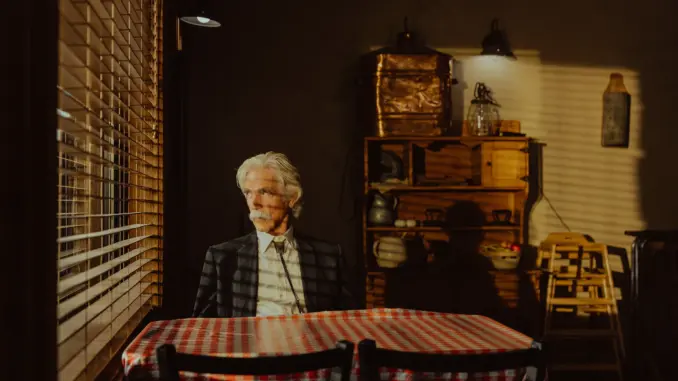
Then there’s Academy Award Nominee Sam Elliott, new to this season. With his perpetually furrowed brow, bushy mustache, and lanky form, he’s the Western ethos in human form. His clothes—leather patinated by the years, flannel that’s less costume than ragged second skin—carry the authority of a man who’s been on horseback since birth.
Across the social divide stand Academy Award Nominees Demi Moore and Andy Garcia’s cartel boss, Gallino. Their look is all control and polish: buttery cashmere neutrals, crisp tailoring, the gleam of money that never touches dirt, and conceals a feral hunger for money. Together, they bring a boardroom elegance to Sheridan’s dust-blown world, proving that power dresses just as purposefully as it drills.
While costumes are born from Sheridan’s richly drawn characters, they also draw upon the fashion tradition built into this country’s bones. We’re calling it rugged luxe—a melding of hardscrabble workwear and urban gentility that could only exist in the US.
The trend taps into something deeper than nostalgia. In our digital era, the cowboy mythos reads as a yearning for a more tactile, authentic age. Its resilience and drive are rendered in raw cotton and patinated leather. Landman doesn’t just ride that wave; it embodies it, turning blue-collar grit into something akin to Paris couture.
“The Western style in Landman is rooted in authenticity,” says Janie Bryant, the show’s costume designer. “It’s the grit, dust, and strength of West Texas. Leather, denim, and boots aren’t just wardrobe pieces; they’re the characters’ armor, symbols of endurance and identity. Every crease and scuff tells the story of survival and pride in their heritage.”
The beauty of Landman’s costuming is how effortlessly it bridges the past and present. Denim—the great American equalizer, and perhaps our most important cultural export—appears on everyone from field workers to financiers. Pearl-snap shirts, once no-nonsense, now subtly signal taste. Even the classic wide-brimmed cowboy hat, adopted by luxury houses and streetwear labels alike, makes a sun-shielding cameo as a crown of quiet, dramatic fortitude.
The costumes, then, are instant insight into Landman’s characters. “I wanted the contrast between the oil field workers and the executives to be unmistakable,” Bryant said. The roughnecks live in worn denim, sun-faded cottons, and utilitarian layers—their clothes breathe real life. The executives, in contrast, wear tailored silhouettes, rich fabrics, and polished boots that speak to privilege and power. It’s the story of two worlds colliding in the same Texas dust.”
There’s something undeniably poetic in how the aesthetics of oil boomtowns—workwear, plainspoken craftsmanship, practicality—have trickled into global fashion. Similar to the way Sheridan’s Landman is an allegory for American ambition, these garments themselves reflect the yearning for self-made authenticity, for a simpler way of life.
More than a TV show, Landman has become a mirror for the American mood: money-hungry, sunburned, and still chasing some idea of Manifest Destiny. “Landman captures what’s happening in fashion right now—this reawakening of the Western spirit,” says Bryant. “People are craving authenticity, heritage, and individuality. Western style is timeless because it celebrates strength and self-expression. In Landman, we show that Western doesn’t have to mean traditional—it can be powerful, sexy, elegant, even subversive. I think that’s why audiences connect with it—it mirrors the confidence we’re all seeking to embody.”
Landman fashion doesn’t romanticize the West so much as uses it for its own devices—less cowboy cosplay than storytelling in clothes. Watching Thornton’s Norris saunter through the dust in a denim jacket that’s lived a thousand lives, or Moore gliding past him in sculpted silk, you sense the pull of a national fantasy: to be both tough and elegant, both built and born. “Taylor Sheridan and I talk constantly about character through clothing,” says Bryant. “That’s where story and style meet.”