
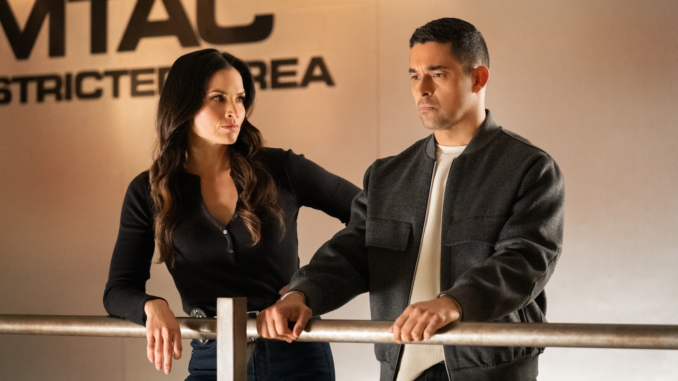
The high-stakes world of the Naval Criminal Investigative Service has always been built on a foundation of elite teamwork and unspoken bonds, but few dynamics have left as many lingering “what ifs” as the smoldering, unfinished connection between Special Agents Nick Torres and Eleanor Bishop. From the moment Wilmer Valderrama’s Torres joined the MCRT in Season 14, his “lone wolf” swagger found its perfect foil in the analytical, evolving brilliance of Emily Wickersham’s Bishop. Over five seasons, their relationship transitioned from professional skepticism to a deep, visceral friendship, and eventually, to a romantic tension so thick it practically crackled through the screen. Yet, following Bishop’s shock departure in the Season 18 finale to pursue a deep-cover mission, fans were left with a narrative void that persists to this day. In 2026, as the NCIS universe continues to expand, the question remains at the forefront of the fandom: What if Torres and Bishop had actually been together?
If the “Ellick” pairing had been allowed to flourish into a full-fledged relationship within the walls of the Navy Yard, it would have fundamentally altered the DNA of the team. Unlike the “Tiva” dynamic, which was built on playful banter and a decade of slow-burn longing, Torres and Bishop shared a more grounded, protective intensity. They were two outsiders who found solace in each other’s shadows. A formalized relationship would have likely seen Torres shed his defensive “tough guy” exterior much sooner, allowing the audience to see a man anchored by a partner who truly understood the cost of his undercover past. For Bishop, being with Nick would have represented a final break from the “NSA Probie” she once was, solidifying her transformation into a confident, formidable field agent who fought for a personal life as hard as she fought for justice.
The professional implications of such a union would have been a fascinating study in “Rule 12” defiance. While Gibbs famously forbade coworkers from dating, the era following his departure has seen a softening of the agency’s rigid social boundaries. Had they stayed together, we might have seen a partnership that functioned with a near-telepathic efficiency in the field. However, it also would have introduced a layer of vulnerability that the MCRT rarely sees. Seeing Torres risk a mission to ensure Bishop’s safety, or Bishop using her analytical mind to protect Nick from his more impulsive instincts, would have added a high-stakes emotional layer to every shootout and chase. It would have turned the procedural into a deeply personal drama, where every case carried the weight of their shared future.
Technically, the show teased this potential through masterfully shot sequences of shared intimacy—late-night stakeouts in the rain, the quiet intensity of the NCIS elevator, and the raw vulnerability of their training sessions. The cinematography of their final seasons often utilized tight, close-up framing to isolate the two agents from the rest of the team, creating a visual “bubble” that suggested they were already a unit of two. The “What If” scenario lingers because the actors shared a chemistry that felt authentic and unforced. If they had remained together, the show’s aesthetic would have likely leaned further into this “noir romance” territory, balancing the clinical nature of forensics with the heat of a forbidden, yet inevitable, love.
The most tragic aspect of the “What If” is the impact on their individual character arcs. Bishop’s departure to become a “disgraced” operative for Odette was a choice that prioritized duty over heart, a move that mirror-imaged Ziva David’s own history but left Nick in a state of emotional wreckage. Had they been together, the story would have been one of healing rather than abandonment. We would have seen Torres finally find the “home” he had been searching for since his days in South America, and Bishop find the balance between her lethal skills and her human needs. Fans still wonder if a “happily ever after” for these two would have saved Torres from the dark, self-destructive path he navigated in later seasons, and if it would have given Bishop a reason to stay in the light.
As we look toward the future of NCIS in 2026, the legacy of the Torres-Bishop connection serves as a reminder that the most compelling stories are often the ones left unfinished. The “What If” serves to keep the characters alive in the collective imagination of the audience. Whether it’s through fan fiction or hopes for a surprise reunion in a future crossover, the desire to see Nick and Ellie finally “be” together is a testament to the power of their chemistry. They represented a modern, gritty version of the NCIS romance—one built on mutual respect, shared trauma, and a silent promise that, for a few years at least, they weren’t alone in the dark.
Ultimately, the question of “What If” is what keeps the NCIS flame burning. It reminds us that behind the badges and the ballistic vests, these are people searching for connection in a world that often demands they sacrifice it. While they may currently be separated by miles and missions, the “Ellick” flame remains one of the brightest “could-have-beens” in television history, a quiet, powerful reminder that sometimes the most important evidence of a great show isn’t what happened on screen, but what the fans can’t stop imagining.