
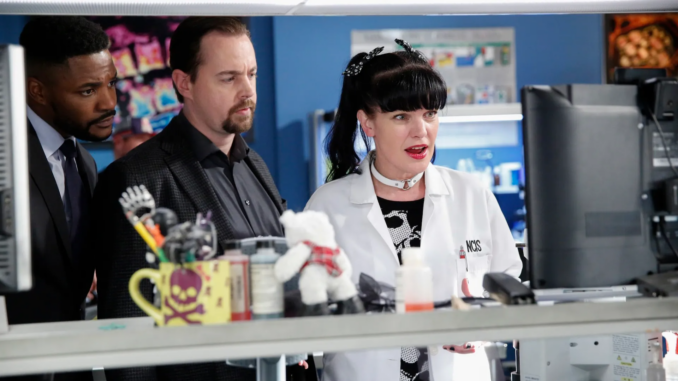
For fifteen seasons, the black-clad, pigtail-wearing forensic scientist Abby Sciuto was the heartbeat of the NCIS laboratory. As the resident genius who could find a fingerprint on a grain of sand, Pauley Perrette’s character became a global icon for girls in STEM and a beloved fixture of the CBS lineup. However, when she officially departed in 2018, the exit was shrouded in a level of mystery and social media drama that the show’s writers could never have scripted. While the onscreen reason for her departure was a poignant tribute to a fallen colleague, the dark truth about why Abby really left the lab involves a breakdown in workplace safety and a fractured relationship with the show’s leading man that changed the series forever.
The official narrative within the show saw Abby leaving to start a charity in honor of MI6 Agent Clayton Reeves, who died protecting her during a street mugging. It was a noble, selfless end for a character defined by her heart. Yet, behind the scenes, the atmosphere had turned toxic. The catalyst for the decline was a 2016 incident involving Mark Harmon’s rescue dog, which reportedly bit a crew member on set, resulting in an injury that required fifteen stitches. While Harmon continued to bring the dog to work, Perrette reportedly became a vocal advocate for the crew’s safety, leading to a massive rift between the two stars.
This conflict became so severe that the production was forced to implement a grueling schedule to ensure the two actors never had to be in the same room at the same time. If fans look closely at the final seasons of Abby’s tenure, they will notice a jarring lack of physical interaction between Gibbs and Abby. Scenes were filmed separately and spliced together in editing, a technical workaround that the producers tried to hide but which ultimately felt hollow to the observant viewer. For a show built on the father-daughter dynamic between these two characters, the realization that they couldn’t stand to be on the same set was a bitter pill for the fanbase to swallow.
The silence from the network during this period only fueled the speculation. It wasn’t until after her departure that Perrette took to social media to claim she was terrified of Harmon and had been the victim of multiple physical assaults. While the details of these allegations remained vague and were never legally pursued in a public court, they painted a grim picture of the NCIS laboratory as a place of fear rather than the quirky, music-filled sanctuary fans saw on Tuesday nights. The producers were essentially caught in a corporate stalemate: they couldn’t fire the face of the franchise, Mark Harmon, but they were losing one of their most marketable assets in Perrette.
What the producers hid was the extent of the internal investigation and the non-disclosure agreements that likely governed the exit. The dark truth is that the NCIS lab, designed to be a place where the truth is uncovered through science, became a site of suppressed grievances and professional isolation. By the time Perrette walked away, she wasn’t just leaving a job; she was escaping an environment that she felt had betrayed her. The exit was a calculated move to protect the brand’s image, ensuring that the show could continue its ratings dominance without the public fallout of a high-profile lawsuit.
The aftermath of her departure left a void that the show struggled to fill for years. While Kasie Hines eventually found her footing as the new forensic scientist, the shadow of Abby Sciuto still looms large over the basement lab. The “Dark Truth” serves as a reminder that even the most successful television families are subject to human ego and the pressures of a multi-billion dollar industry. Producers managed to keep the show running for another decade, but the magic of the original team was permanently fractured by a dog bite and the silence that followed.
Ultimately, Abby Sciuto left because the line between her character’s safety and the actress’s reality had blurred beyond repair. The lab remains a central part of the NCIS universe, but it serves as a testament to the fact that the most complex cases aren’t always solved with a DNA sequencer; sometimes, they are buried in the fine print of a contract and the hushed whispers of a closed set. For the fans who still miss the sound of techno music and the whir of the mass spectrometer, knowing the reality of her exit adds a layer of sadness to every rerun, proving that even in the world of naval intelligence, the hardest secrets to keep are the ones kept by your own team.