
Contents
A Cultural Phenomenon That Defined an Era
When The Beverly Hillbillies first aired in 1962, few could have predicted just how massive it would become. The show followed the Clampett family—simple, good-hearted people who struck oil and moved from rural poverty to the opulence of Beverly Hills. With its fish-out-of-water humor and sharp satire of class differences, it quickly became one of the most-watched television programs in America.
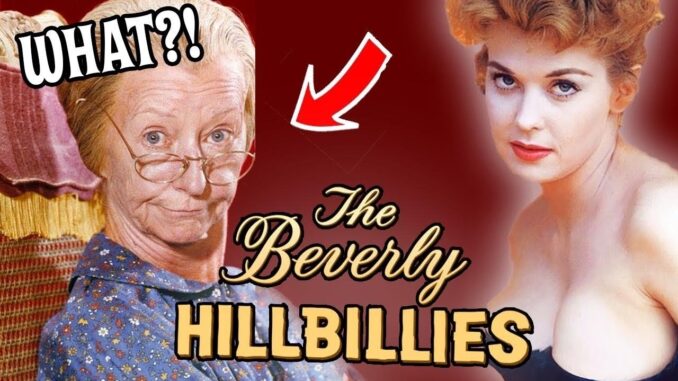
At its peak, the series dominated ratings charts, often outperforming nearly every other show on television. Characters like Jed Clampett, portrayed by Buddy Ebsen, and the unforgettable Granny, played by Irene Ryan, became household names. The show’s unique blend of innocence and comedy resonated deeply with audiences during a time of rapid social change.
The Formula That Worked—Until It Didn’t
For years, the success of The Beverly Hillbillies seemed unstoppable. Its formula was simple but effective: take the Clampetts’ rural sensibilities and place them in absurdly sophisticated situations. Whether it was high-society parties, banking confusion, or cultural misunderstandings, the humor always landed.
However, as the late 1960s approached, television began to shift. Audiences were changing, and so were their tastes. More socially conscious programming started to gain traction, reflecting real-world issues like war, civil rights, and generational divides. Shows that once felt timeless suddenly risked feeling outdated.
Despite still maintaining solid ratings, The Beverly Hillbillies began to show signs of aging. Critics increasingly labeled it as repetitive, arguing that its core jokes had been stretched too thin. While loyal fans remained, the industry itself was evolving in a direction the show wasn’t designed to follow.
The “Rural Purge” That Changed Everything
The real turning point came not from declining popularity, but from a strategic shift within CBS. In the early 1970s, the network made a bold decision that would later be known as the “rural purge.”
This initiative aimed to modernize CBS’s programming lineup. Executives believed that advertisers were more interested in younger, urban viewers rather than the older, rural-skewing audience that shows like The Beverly Hillbillies attracted. As a result, a wave of cancellations swept through the network.
Despite still performing well in the ratings, The Beverly Hillbillies was abruptly canceled in 1971 after nine successful seasons. Alongside it, other rural-themed shows such as Green Acres and Hee Haw were also removed from the lineup.
The decision shocked both fans and cast members. It was a rare case where a hit show didn’t fade away due to lack of popularity—but rather because it no longer fit a network’s evolving brand strategy.
No Grand Finale—Just a Sudden Goodbye
Unlike many modern television series, The Beverly Hillbillies didn’t receive a carefully crafted series finale. There was no emotional send-off, no long goodbye to beloved characters. Instead, the show simply ended with a regular episode, leaving fans without closure.
This abrupt ending only added to the sense of confusion and disappointment. Viewers who had followed the Clampetts for nearly a decade expected a more meaningful conclusion. Instead, the story just… stopped.
In retrospect, this lack of a finale has become part of television history—an example of how differently networks treated even their biggest hits during that era.
The Cast’s Legacy Beyond the Show
Even after the series ended, its stars remained closely associated with their iconic roles. Buddy Ebsen continued acting in television and film, while Irene Ryan earned critical acclaim for her stage performances before her passing in 1973.
Other cast members, including Donna Douglas (Elly May Clampett), remained beloved figures among fans for decades. The show’s characters became cultural touchstones, frequently referenced and revisited in reruns.
Syndication played a crucial role in preserving the legacy of The Beverly Hillbillies. New generations discovered the show long after its cancellation, proving that its humor still had enduring appeal—even as television continued to evolve.
Why the Ending Still Matters Today
The cancellation of The Beverly Hillbillies is often cited as one of the most surprising decisions in television history. It highlights the tension between creative success and business strategy—something that continues to shape the entertainment industry today.
In many ways, the show was a victim of timing. Had it debuted in a different era, it might have adapted and continued. But in the context of the early 1970s, it represented a style of storytelling that networks were eager to move beyond.
Still, its influence cannot be overstated. The series helped define sitcom storytelling, paving the way for future comedies that explore cultural contrasts and social satire.
A Timeless Goodbye, Even Without Closure
Although The Beverly Hillbillies didn’t end with a dramatic finale, its legacy remains remarkably strong. The Clampetts may not have received a proper goodbye, but their story continues to live on through reruns, nostalgia, and cultural memory.
In the end, the show didn’t disappear because it failed—it ended because television itself was changing. And while that change brought new kinds of storytelling, it also marked the end of a simpler, uniquely charming era.
For millions of fans, the laughter never really stopped—it just moved into reruns, where the Clampetts are still striking oil and navigating Beverly Hills, one misunderstanding at a time.