
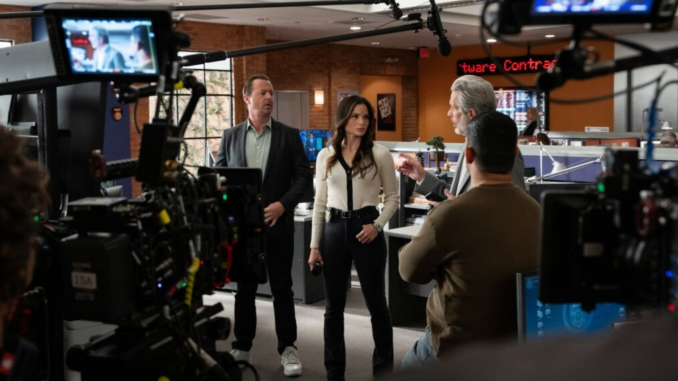
For over two decades, NCIS has stood as a bastion of television consistency, maintaining its status as one of the most-watched scripted dramas in the world. On screen, the team at the Navy Yard operates with a sense of seamless professional harmony, but the long history of the franchise has not been without its share of turbulence away from the cameras. When fans discuss the longevity of the series, the conversation inevitably shifts toward the “set drama” that has occasionally made headlines, proving that the real-life dynamics of a Hollywood production can be just as complex and high-stakes as the federal investigations depicted in the script.
Understanding what really happened behind the scenes requires looking at the intense pressure of producing over twenty episodes a year. For much of its run, NCIS was led by Mark Harmon, whose portrayal of Leroy Jethro Gibbs set the tone for the entire production. Harmon was known for a rigorous work ethic, often described as the first to arrive and the last to leave. However, this high-pressure environment eventually led to one of the most publicized rifts in television history. The departure of Pauley Perrette, who played the beloved forensic scientist Abby Sciuto, sent shockwaves through the industry. For years, viewers wondered why two of the show’s most iconic characters stopped appearing in scenes together despite being in the same building.
The reality of that situation was rooted in a fundamental breakdown of the working relationship, reportedly sparked by a workplace safety concern involving a dog on set. While the details remained murky for a long time, the fallout illustrated the heavy toll that long-term production takes on a cast. It served as a reminder that the “found family” portrayed on television is a professional arrangement subject to the same stresses as any other workplace. This period of transition was a turning point for the show, forcing the writers and producers to prove that the NCIS brand was stronger than any single personality clash.
Beyond individual rivalries, the culture of the NCIS set has often been described as an old-school environment. In the early seasons, the show operated under the creative direction of Donald P. Bellisario, a legendary producer known for a demanding and sometimes chaotic management style. The tension reached a breaking point in 2007 when the creative differences between the show’s creator and its lead actor became irreconcilable. This led to Bellisario’s departure from his own show, a move that was unprecedented at the time. This power struggle effectively shifted the creative control of the series and established a new era where the lead actors had significant influence over the show’s narrative direction.
However, focusing solely on the friction overlooks the deep bonds that have also formed behind the scenes. For every headline about a disagreement, there are dozens of stories about the cast supporting one another through personal milestones and career shifts. The longevity of actors like Sean Murray and Brian Dietzen, who have grown up on the show, suggests a workspace that offers immense professional stability. Many cast members have transitioned into directing and producing, a testament to a production culture that encourages internal growth. This balance between high-intensity drama and career-long loyalty is the secret ingredient that has kept the machinery of NCIS running for over 1,000 episodes across the entire franchise.
The “exposed” drama often serves as a catalyst for the show’s evolution rather than its downfall. When Michael Weatherly departed to pursue other projects, it wasn’t due to a scandal but a natural conclusion to a decade-long journey. Each time a major star leaves, the “set drama” narrative resurfaces, but the show consistently manages to reinvent itself. The introduction of new blood, from Wilmer Valderrama to Gary Cole, has been managed with a level of professionalism that masks the logistical nightmares of cast turnover. It proves that the institution of NCIS is built on a framework that can withstand the departure of its most recognizable faces.
In the modern era of social media and instant news, the transparency of television sets has increased significantly. Current cast members often share behind-the-scenes glimpses of a much lighter, more collaborative atmosphere, suggesting that the lessons of the past have been learned. The “drama” that once dominated headlines has largely been replaced by a sense of gratitude for the show’s enduring success. As NCIS moves into the 2026 and 2027 seasons, the focus has shifted from internal conflict to the challenge of maintaining quality in a changing media landscape.
Ultimately, the story of what happened behind the scenes of NCIS is a story of human endurance. It is a chronicle of how a group of talented, strong-willed individuals navigated the pressures of global fame and grueling schedules to create something that resonates with millions. While the tabloid headlines may focus on the moments of friction, the true legacy of the show is its ability to overcome those challenges. The set of NCIS is a microcosm of the show itself—resilient, complicated, and always moving forward despite the shadows of the past. For the fans, knowing the hurdles the team faced only makes the finished product more impressive, proving that the real-world foundation of the Navy Yard is as tough as the agents it portrays.