House of the Dragon Season 3 is making one particularly intriguing addition to its cast. The next outing of the Game of Thrones prequel will bring several new participants into the Dance of the Dragons, as the war between Team Black and Team Green continues. The most high-profile of these include James Norton as Lord Ormund Hightower, nephew of Otto and the head of House Hightower, and Tommy Flanagan as Lord Roderick Dustin, aka Roddy the Ruin, the leader of the Winter Wolves, the army of grizzled Northmen sent by Lord Cregan Stark.
Interestingly, there are also reports that another actress will play Jaehaera Targaryen in House of the Dragon Season 3. The daughter of King Aegon II Targaryen and Queen Helaena Targaryen has only briefly appeared in the series so far, and as a toddler at that (played by Lulu Barker). The word is that 10-year-old Pearl Clark will take on the role alongside Barker, meaning we’ll be seeing Jaehaera as both a small child and one around 10. The reason why hasn’t been revealed (and the casting is not yet official), but there’s one likely reason to do it, and it connects to her brother, Maelor, being cut from the show.
House Of The Dragon Controversially Cut Prince Maelor Targaryen
In Fire & Blood, Maelor is the third and youngest child of Aegon and Helaena, and is involved in the scene with Blood and Cheese. There, Helaena is forced to choose between her two sons. Eventually, she picks Maelor, because he’s younger and won’t understand what’s going on. However, Blood and Cheese kill Jaehaerys instead. Season 2 of the TV show changed this by omitting Maelor, with Helaena instead having to choose between Jaehaerys and Jaehaera instead. This came as a result of compressing the timeline and streamlining the narrative, but did have consequences.
In the book, Maelor becomes heir to the Iron Throne after Jaehaerys’ death (because the rules of succession mean it cannot pass to a female, and given Aegon is fighting a war against Rhaenyra’s claim, he can’t exactly go change it). In the TV show, Aemond is now Aegon’s heir instead. But the even greater consequence is how it factored into the declining relationship between showrunner Ryan Condal and author George R.R. Martin. While likely just one of several issues, it was the one where Martin publicly critiqued House of the Dragon in a now-deleted blog post.
The author’s major issue wasn’t with the Blood and Cheese scene itself – though he did think it weaker than in the book – but what he referred to as the butterfly effect of the decision. When Rhaenyra is about to take King’s Landing, both Maelor and Jaehaera are smuggled out of King’s Landing: the former is to be taken to Oldtown, the latter to Storm’s End.
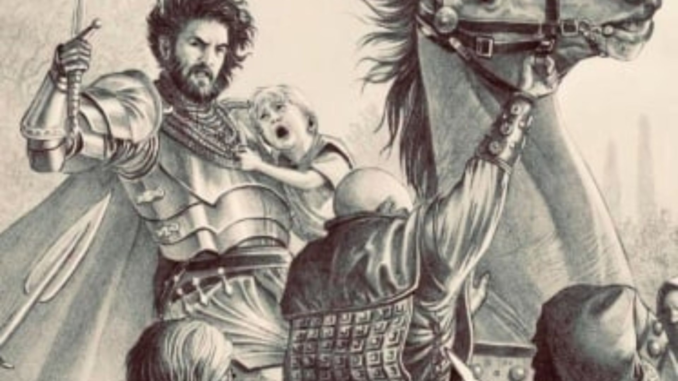
The young prince is put in the charge of Ser Rickard Thorne of the Kingsguard, but they’re discovered at an inn at the Blacks-held Bitterbridge. Rickard is killed by crossbows while trying to flee, and Maelor is murdered shortly afterward. Some reports claim he was torn to pieces by a mob, another that he was chopped into parts that could be sold to a butcher, and a third that he was crushed. Whatever the grim fate really was, Maelor died. Not long after this, Helaena, who is already depressed and going mad with grief and guilt, takes her own life. And as Martin wrote in that blog post:
“In the book, when word of Prince Maelor’s death and the grisly manner of his passing (pp. 505) reaches the Red Keep, that proves to be the thing that drives Queen Helaena to suicide. She could barely stand to look at Maelor, knowing that she chose him to die in the “Sophie’s Choice” scene… and now he is dead in truth, her words having come true. The grief and guilt are too much for her to bear. In Ryan’s outline for season 3, Helaena still kills herself… for no particular reason. There is no fresh horror, no triggering event to overwhelm the fragile young queen.
“Maelor by himself means little. He is a small child, does not have a line of dialogue, does nothing of consequence but die… but where and when and how, that does matter. Losing Maelor weakened the end of the Blood and Cheese sequence, but it also cost us the Bitterbridge scene with all its horror and heroism, it undercut the motivation for Helaena’s suicide, and that in turn sent thousands into the streets and alleys, screaming for justice for their “murdered” queen. None of that is essential, I suppose… but all of it does serve a purpose, it all helps to tie the story lines together, so one thing follows another in a logical and convincing manner.”