
Contents
- A Bold Career Pivot That Caught Everyone Off Guard
- Leaving Comfort Behind
- Enter “Tracker”: A Different Kind of Hero
- Why the Risk Was Necessary
- The Challenges of Reinvention
- Early Reception and Audience Response
- Redefining His On-Screen Identity
- The Bigger Picture: Television Trends
- A Risk That’s Paying Off
- What Comes Next?
A Bold Career Pivot That Caught Everyone Off Guard
When Justin Hartley wrapped his emotionally charged run on This Is Us, few expected his next move to be a sharp turn into the world of action and survival drama. Known for portraying Kevin Pearson—a character defined by vulnerability, addiction struggles, and deep family ties—Hartley had built a reputation as a performer who excelled in emotionally rich storytelling. So when he stepped into the lead role of Colter Shaw in Tracker, it raised eyebrows across Hollywood and among fans alike.
This transition wasn’t just a genre shift—it was a calculated risk that could either redefine his career or alienate the audience that had grown attached to his previous persona.
Leaving Comfort Behind
For six seasons, Hartley thrived in the layered storytelling of This Is Us. The show’s success was built on emotional resonance, character depth, and a devoted fanbase that connected deeply with its cast. Hartley’s portrayal of Kevin earned him widespread praise, particularly for his ability to balance charm with internal conflict.
Walking away from that kind of role—and the expectations that come with it—is no small decision. Actors often struggle to escape the shadow of a defining performance. In Hartley’s case, staying in similar roles would have been the safer path: more dramas, more emotionally driven characters, and a continuation of the image audiences already loved.
Instead, he chose uncertainty.
Enter “Tracker”: A Different Kind of Hero
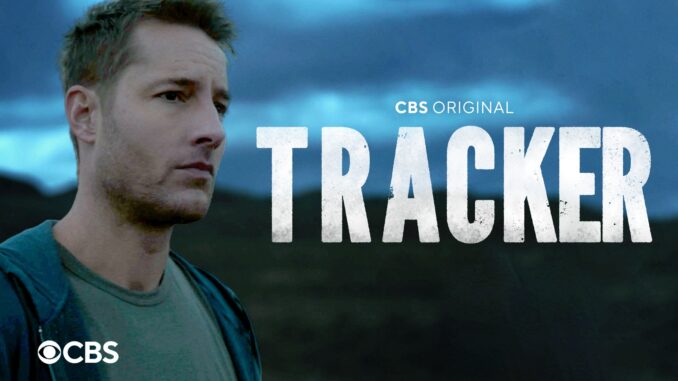
In Tracker, Hartley plays Colter Shaw, a lone-wolf survivalist who travels across the country solving mysteries and locating missing persons. The character is physically capable, mentally sharp, and emotionally guarded—a stark contrast to Kevin Pearson’s open vulnerability.
This shift allowed Hartley to explore a new dimension of his acting range. Colter is not defined by long monologues or tearful breakdowns but by action, instinct, and quiet intensity. The storytelling itself is more episodic and fast-paced, leaning into suspense and procedural elements rather than emotional arcs.
For Hartley, this meant adapting not just his performance style but also his on-screen presence. The physical demands increased, the pacing changed, and the emotional expression became more restrained.
Why the Risk Was Necessary
Career longevity in Hollywood often depends on reinvention. Actors who remain too closely tied to a single type of role can find themselves boxed in, limiting future opportunities. Hartley’s move to Tracker can be seen as a strategic effort to avoid that fate.
By stepping into an action-oriented lead role, he signals to casting directors and audiences that he is more than a one-dimensional performer. He’s capable of carrying a different kind of show—one that relies less on ensemble storytelling and more on a central figure driving the narrative.
This kind of repositioning is particularly important in the television landscape, where leading a network procedural can open doors to long-term stability and broader appeal.
The Challenges of Reinvention
Of course, such a transition doesn’t come without risks. Fans of This Is Us might find it difficult to reconcile Hartley’s new persona with the one they grew to love. Emotional attachment to characters can be powerful, and seeing an actor in a radically different role can create a sense of disconnect.
Additionally, the action-drama genre comes with its own set of expectations. Audiences expect credibility in physical scenes, a commanding presence, and the ability to maintain tension across episodic storylines. If the performance doesn’t land, the shift can feel forced rather than natural.
Hartley had to prove that he could meet these demands—not just once, but consistently.
Early Reception and Audience Response
The response to Tracker has been largely positive, with many viewers appreciating the show’s straightforward storytelling and Hartley’s grounded performance. While some fans initially approached the series with skepticism, curiosity quickly turned into engagement as the character of Colter Shaw began to resonate.
What stands out is Hartley’s ability to bring subtle emotional depth to a role that could easily have been one-note. Even in a more action-driven format, he manages to hint at the internal life of his character, creating a bridge between his past work and his current role.
This balance has been key to winning over both new viewers and longtime fans.
Redefining His On-Screen Identity
Hartley’s move from This Is Us to Tracker represents more than a genre switch—it marks a redefinition of his on-screen identity. He is no longer just the emotionally conflicted heartthrob; he is now also a capable action lead with the potential to anchor a long-running series.
This kind of dual identity can be incredibly valuable. It allows an actor to move fluidly between different types of projects, increasing both versatility and longevity.
In many ways, Hartley is following a path taken by other actors who have successfully transitioned from drama to action, proving that range is one of the most important assets in the industry.
The Bigger Picture: Television Trends
Hartley’s career shift also reflects broader trends in television. Networks like CBS continue to invest heavily in procedural and action-driven series, which tend to attract wide audiences and perform well in syndication.
By aligning himself with this format, Hartley positions himself within a stable and commercially successful segment of the industry. At the same time, streaming platforms continue to value character-driven dramas, meaning he hasn’t closed the door on returning to more emotionally focused roles in the future.
This strategic positioning ensures that he remains relevant across multiple viewing platforms and audience demographics.
A Risk That’s Paying Off
Ultimately, Hartley’s decision to take on Tracker appears to be paying off. The show’s growing popularity and his convincing performance suggest that the risk was not only justified but necessary for his evolution as an actor.
Rather than being defined by a single iconic role, Hartley is actively shaping a diverse and dynamic career. He’s proving that stepping خارج the comfort zone—while intimidating—can lead to growth, reinvention, and renewed relevance.
What Comes Next?
The success of Tracker opens up new possibilities for Hartley. Whether he continues in the action genre, returns to emotionally driven storytelling, or explores entirely new territory, he now has the credibility to do so.
What’s clear is that this wasn’t just a risky move—it was a deliberate one. And in an industry where staying the same can be more dangerous than changing, Justin Hartley’s bold transition might just be the smartest decision of his career so far.