
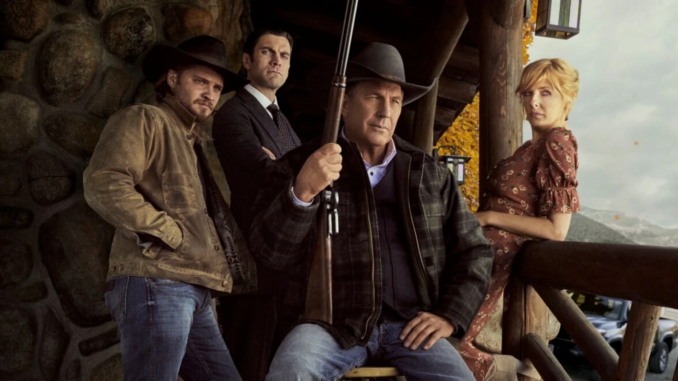
In the high-altitude landscape of Montana, where the mountains of the Yellowstone Dutton Ranch touch the sky, there is a recurring sentiment that land is the only thing worth dying for. However, Taylor Sheridan’s sprawling neo-western epic reveals a much darker truth about the people who guard that land. While the Dutton family operates under the guise of a united front, the internal mechanics of their dynasty prove that shared DNA is often a liability rather than a bond. In this world, blood doesn’t always mean loyalty, and the Duttons know this reality too well, as their history is written in the betrayals and scars they have inflicted upon one another in the name of a legacy that might eventually consume them all.
The core of this familial dysfunction is the patriarch, John Dutton. He has spent decades teaching his children that the ranch comes before everything, including their own happiness, their morality, and their individual identities. By making the land the ultimate priority, John inadvertently created a hierarchy where his children are valued only by their utility to the ranch. This transactional form of love is the poison that has seeped into every relationship under the Dutton roof. When loyalty is demanded rather than earned, it becomes a form of servitude, and as the series progresses, the resentment born from this pressure begins to outweigh the instinct of kinship.
The most explosive manifestation of this failed loyalty is found in the relationship between Beth and Jamie. On the surface, they are siblings raised with every advantage of the Montana elite, but in reality, they are two people locked in a cold war that has lasted a lifetime. The revelation of Jamie’s past decision regarding Beth’s medical care is the definitive proof that blood provides no protection against betrayal. Jamie’s choice to prioritize the family’s reputation over his sister’s future created a wound that no amount of shared history can heal. It transformed their bond into a predatory cycle of blackmail and hatred, proving that the person who shares your name can also be the person most likely to destroy your life.
Jamie Dutton himself represents the ultimate tragedy of the blood-versus-loyalty debate. As the adopted son who spent his life trying to outrun the shadow of his biological father, Jamie is a man without a country. His constant vacillation between the Dutton legacy and his own desire for autonomy highlights a fundamental truth of the show: loyalty cannot be forced through a sense of debt. When Jamie discovers his true origins, the thin veneer of his commitment to John begins to peel away. He realizes that he was raised to be a tool, not a son, and that realization makes his eventual turn against the family feel not like a betrayal, but like an inevitable consequence of a foundation built on secrets rather than genuine affection.
Even Kayce, the son who arguably possesses the most natural heart, finds that his bloodline is a cage. His struggle to balance his loyalty to his wife and son with the demands of his father is the moral compass of the series. Kayce’s journey often takes him away from the ranch, as if he instinctively knows that staying too close to the Dutton bloodline will eventually force him to compromise his soul. He sees the violence and the emotional vacuum that defines his father’s world and recognizes that being a Dutton often means sacrificing the very humanity that makes a family worth having. His hesitation to fully commit to the ranch’s dark methods is a silent protest against the idea that family loyalty should be blind and absolute.
The tragedy is compounded by the fact that the most loyal people in the Duttons’ orbit are often those who share no blood with them at all. Characters like Rip Wheeler demonstrate a level of devotion that puts the biological heirs to shame. Rip’s loyalty is born from choice and gratitude, making it far more resilient than the begrudging compliance shown by Jamie. This contrast serves to highlight the Duttons’ central failure: they have mastered the art of holding land, but they have failed at the art of holding each other. They operate as a paramilitary organization rather than a family unit, and as a result, their internal walls are as vulnerable as their external borders.
As the narrative of Yellowstone moves toward its inevitable conclusion, the theme of fractured loyalty becomes the primary driver of the plot. The external threats from land developers and political rivals are significant, but they pale in comparison to the damage the Duttons do to one another. The ranch is a kingdom built on a fault line of resentment, and every time John Dutton demands loyalty based on the family name, he adds pressure to that line. The story serves as a haunting reminder that while blood might be thicker than water, it is also much easier to spill.
Ultimately, the Duttons are a cautionary tale about the limits of legacy. They prove that when you build an empire on the backs of your own kin, the empire will eventually collapse under the weight of their collective trauma. The land may remain, indifferent to the people who fought over it, but the family itself is a testament to the fact that blood is only a starting point. Without trust, honesty, and mutual respect, a bloodline is just a list of people who know exactly where to twist the knife. In the end, the Duttons’ greatest enemy isn’t the changing world; it is the realization that they were never truly on the same side to begin with.