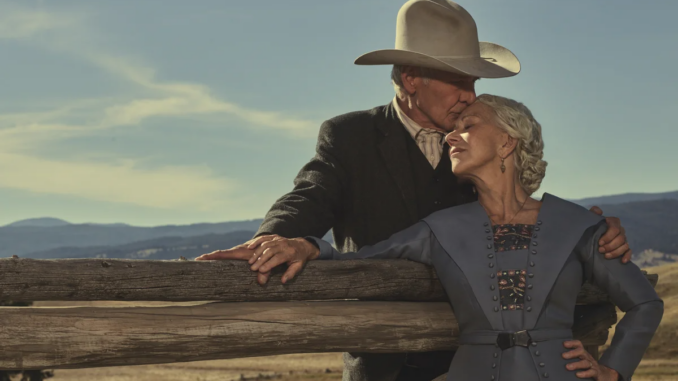
The vast and unforgiving landscapes of the American West have always been a theater of conflict, but the origins of the most famous ranching dynasty in television history are rooted in a particularly brutal era of transition. Long before John Dutton faced off against modern developers in the flagship series, there was a primal struggle for survival that defined the soul of the family. The prequel saga 1923 serves as a haunting and epic chronicle of this period, illustrating that before there was a ranch, there was war. Led by the towering cinematic presence of Harrison Ford and Helen Mirren, the narrative explores the sheer grit required to protect the burgeoning Dutton empire against a backdrop of prohibition, drought, and the creeping shadow of the Great Depression.
The casting of Harrison Ford as Jacob Dutton and Helen Mirren as Cara Dutton brought a level of gravitas to the franchise that elevated the Western genre to the height of prestige drama. Jacob is the brother of James Dutton, the man who first led the family to Montana, and he carries the heavy burden of maintaining what his brother died to establish. Ford portrays Jacob with a gravelly, no-nonsense authority, a man who understands that the law in the mountains is only as strong as the man holding the rifle. His performance captures the weariness of a patriarch who has spent his entire life fighting the elements and the greed of men who covet his land.
However, the true heartbeat of this era is Cara Dutton. Helen Mirren delivers a masterclass in resilience, portraying a woman who is the emotional and tactical anchor of the family. While Jacob handles the physical threats on the range, Cara manages the homestead and the psychological welfare of the clan. Their partnership is depicted as a sophisticated and deeply loving alliance, a rarity in the often-cynical world of modern television. Mirren’s Cara is not merely a supportive wife; she is a fierce protector who is capable of making the coldest, most necessary decisions to ensure the family’s survival. When Jacob is incapacitated by violence, it is Cara who steps into the void, proving that the Dutton empire was built on the strength of its women just as much as its men.
The war mentioned in the title of this era is fought on multiple fronts. On the range, the Duttons are locked in a lethal feud with sheep herders and rival ranchers who are desperate for grazing land during a historic drought. These skirmishes are portrayed with a visceral realism that strips away any romanticized notions of the Old West. It is a world of ambush, hangings, and desperate survival. Simultaneously, the family is facing the encroaching forces of modernization. The arrival of electricity, automobiles, and corporate mining interests represents a different kind of invasion—one that threatens to regulate and tax the Duttons out of existence. This conflict between the old ways and the new world provides a sophisticated narrative tension that mirrors the struggles seen in the modern Yellowstone series.
Furthermore, the story expands beyond the borders of Montana to follow the journey of Spencer Dutton in Africa. This international subplot adds a unique flavor to the prequel, showing that the Dutton spirit of survival is a global phenomenon. Spencer, a haunted veteran of the Great War, represents the physical trauma that the family has endured in service to their country and their legacy. His journey back to the ranch is a race against time, as the empire his ancestors bled for teeters on the edge of collapse. The atmospheric contrast between the sun-drenched plains of Africa and the snow-capped peaks of Montana emphasizes the epic scale of the Dutton saga.
The brilliance of 1923 lies in its refusal to offer easy victories. Every inch of progress the family makes is paid for in blood and sacrifice. The show explores the dark moral cost of building a dynasty, asking if the preservation of a legacy justifies the violence required to keep it. As Harrison Ford and Helen Mirren navigate these treacherous waters, they provide a blueprint for the character traits that would eventually define Kevin Costner’s John Dutton decades later. The stubbornness, the loyalty, and the willingness to stand alone against the world are all forged in the fires of the 1920s.
As the series progresses, the audience realizes that the Dutton empire is not just a collection of land and cattle; it is a fortress built against the inevitable march of time. The war to build the ranch was a war for identity in a country that was rapidly changing. By the time the dust settles on this chapter, the foundation for the Yellowstone has been laid, but the scars left on the family remain permanent. This prequel reinforces the idea that the Duttons are not just ranchers; they are survivors of a conflict that began long before they ever set foot in the valley, and their story is a testament to the enduring power of the human spirit in the face of overwhelming odds.