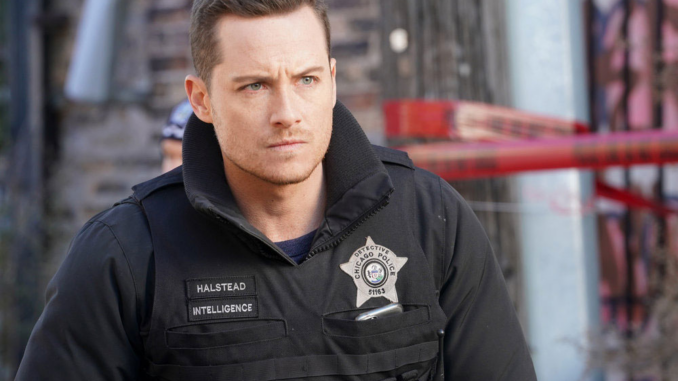
The architectural strength of the One Chicago universe is built on characters who carry their past like a heavy pack, and few have traveled a more arduous road than Jay Halstead. Across ten seasons of Chicago P.D., Jesse Lee Soffer portrayed Halstead not just as a skilled investigator, but as a man constantly at war with his own conscience. From his beginnings as a combat veteran of the U.S. Army Rangers to his final days as a premier detective in the Intelligence Unit, Jay’s journey serves as a powerful exploration of trauma, integrity, and the exhausting search for a moral north star in a city that often lives in the shadows.
Jay Halstead’s military background was never just a footnote in his biography; it was the foundation of his identity. His time as a soldier instilled in him a rigid sense of right and wrong and a tactical precision that made him an asset to Sergeant Hank Voight’s team. However, it also left him with deep psychological scars. In the early seasons, viewers saw a man who used his badge as a shield to keep the world at bay. His transition from the battlefield to the streets of Chicago was marked by a struggle to reconcile the black-and-white rules of combat with the messy, often corrupt reality of urban policing. Unlike his peers, Jay often acted as the unit’s moral compass, frequently clashing with Voight’s “the ends justify the means” philosophy.
Contents
The Moral Anchor of Intelligence
What made Jay Halstead so vital to the dynamic of the show was his refusal to succumb to the darkness that defined his boss. While Voight represented the old-school, vigilante style of justice, Jay represented the potential for a more transparent and principled future. This internal friction created some of the series’ most intense moments. Jay was the one who would look Voight in the eye and say no when a line was about to be crossed. This didn’t just make him a hero; it made him a target for the internal politics of the CPD and the emotional weight of his own decisions. His evolution was a slow burn of realizing that in Chicago, being a good man is often harder than being a good cop.
His relationship with Hailey Upton added another layer of complexity to his journey. Their partnership, often compared to the “Stellaride” bond of Chicago Fire for its intensity and deep mutual respect, eventually blossomed into a marriage. However, this connection also tested Jay’s resolve. As Hailey became more entangled in Voight’s secretive methods, Jay found himself caught in the middle, trying to pull his wife back from the same abyss he had spent years avoiding. This conflict eventually pushed him to a breaking point, leading to the realization that he could no longer remain in a system that required him to compromise his soul every single day.
A Sacrifice for Self-Preservation
The final chapter of Jay’s arc was perhaps his most powerful. In a move that shocked many fans but felt deeply authentic to the character, Jay decided to leave the CPD and return to the Army, taking a post in Bolivia to help track down drug cartels. His departure was not an act of cowardice, but one of extreme self-preservation. He recognized that the darkness of Chicago was beginning to change him, turning him into a version of Voight that he never wanted to be. By returning to the military—a world where the rules were clear and the mission was singular—he was attempting to find the man he was before he stepped into the Intelligence Unit.
This exit was a heartbreaking full circle. He started as a soldier trying to find peace in civilian life and ended as a detective realizing that the only way to keep his peace was to return to being a soldier. It was a sobering reminder that some environments are too toxic even for the strongest individuals. Jesse Lee Soffer’s nuanced performance ensured that Jay didn’t leave as a failure, but as a man who finally chose himself and his integrity over a badge that had become too heavy to wear.
The Lasting Legacy of Detective Halstead
Even after his departure, the shadow of Jay Halstead looms large over the bullpen. He remains the standard for what it means to be a modern detective—someone who balances tactical brilliance with a heart that refuses to harden. His journey taught the audience that growth isn’t always about moving up the ranks; sometimes, it’s about having the courage to walk away from a fight that is changing you for the worse. He left the unit not because he stopped caring, but because he cared too much to let his light be extinguished by the grit of the city.
For the fans of the One Chicago franchise, Jay Halstead will always be the soldier who fought for the soul of the CPD. His legacy is found in every principled stand taken by his former colleagues and in the quiet moments where the unit chooses the right path over the easy one. He was the hero who stayed human in an inhuman world, and his journey remains one of the most resonant stories ever told on network television.