The long-running success of the police drama Blue Bloods has always been its ability to spark intense conversation at the dinner table, both for the fictional Reagan family and for the millions of viewers watching at home. However, a recent narrative arc involving a character nicknamed Officer McNuckles has ignited a particularly fierce debate among the fanbase. This storyline has touched a nerve because it forces the audience to confront the thin line between effective, old-school policing and the modern demands for departmental reform. As the series enters its final stages, the introduction of this controversial figure serves as a litmus test for how viewers perceive the evolution of the New York Police Department and the Reagan legacy itself.
The character of Officer McNuckles represents a throwback to a different era of law enforcement, one defined by a physically imposing presence and a reputation for using heavy-handed tactics to maintain order on the streets. For some segments of the audience, he is a breath of fresh air—a reminder of a time when the police were feared by criminals and respected by the community for their ability to deliver immediate results. Supporters of the McNuckles approach argue that in a city facing rising crime rates and bureaucratic red tape, having an officer who isn’t afraid to get his hands dirty is a practical necessity. They see him not as a rogue element, but as a necessary deterrent in a world that has grown increasingly dangerous for both citizens and the police.
Contents
The Clash of Modern Values and Traditional Methods
However, the debate takes a sharper turn when looking at the perspective of younger viewers and advocates for police accountability. To this group, Officer McNuckles is a walking liability and a symbol of everything that needs to change within the force. They argue that his nickname alone suggests a culture of violence that prioritizes intimidation over de-escalation. The controversy isn’t just about his specific actions, but about what he represents to the communities he patrols. In several episodes, the friction between McNuckles and his more progressive colleagues, like Jamie Reagan, highlights the central tension of the show: can the NYPD maintain its traditional soul while adapting to a society that demands greater transparency and restraint?
Jamie Reagan, who has always been the intellectual and moral compass of the younger generation of Reagans, finds himself at the heart of this debate. His interactions with McNuckles have forced him to choose between the loyalty he owes his fellow officers and the commitment he has to the law. This internal conflict has polarized fans; some believe Jamie is being too soft and idealistic, while others applaud him for standing up against a style of policing that they view as obsolete and harmful. The writing for this arc has been particularly clever, as it doesn’t offer easy answers, instead allowing the characters to voice the very real frustrations felt by law enforcement professionals today.
The Commissioner’s Dilemma
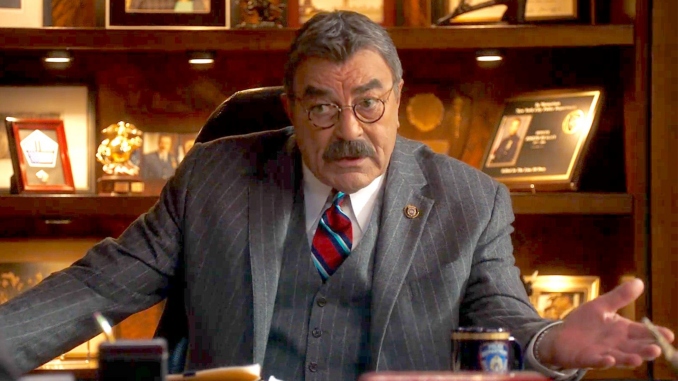
At the top of the hierarchy, Frank Reagan must navigate the political fallout of having an officer like McNuckles on the street. Frank, portrayed with characteristic stoicism by Tom Selleck, understands the value of a tough cop, but he also knows the cost of a lawsuit or a public relations disaster. His struggle to balance his support for the rank-and-file with his duty to the city’s image provides a fascinating look at the burdens of leadership. Some viewers have criticized Frank for not being harsher on McNuckles, suggesting that his silence is a form of tacit approval. Others argue that Frank is simply being a realist, knowing that he cannot fire every officer who uses a little extra muscle if he wants to keep the city safe.
This storyline has also resonated because it mirrors real-world headlines regarding police conduct and the use of force. By introducing Officer McNuckles, the show has moved away from the more sanitized versions of policing often seen in procedurals and dived into the messy, uncomfortable reality of the job. The debate among viewers is a reflection of a broader societal disagreement about the role of the police in the 21st century. Is it better to have an officer who stops the crime but breaks a few rules, or one who follows every procedure but lets the perpetrator slip away?
A Legacy in the Balance
As Blue Bloods moves toward its conclusion, characters like Officer McNuckles serve as a reminder that the Reagan family’s influence over the NYPD is not absolute. There are elements within the department that operate under their own codes, and how the Reagans handle these elements will define their ultimate legacy. The “McNuckles” debate is more than just a disagreement over a single character; it is a conversation about the soul of the city and the people who guard it.
Ultimately, the power of Blue Bloods lies in its refusal to shy away from these controversies. Whether you see McNuckles as a hero or a villain, his presence has forced the audience to engage with the show on a deeper level. It proves that even after fourteen years, the series can still surprise, provoke, and challenge its viewers. As the final episodes approach, the resolution of this arc will likely provide a definitive statement on where the show stands on the future of policing—and whether there is still a place for an officer with heavy knuckles in a world that increasingly values a light touch.