In the rugged, uncompromising landscape of Taylor Sheridan’s Yellowstone, dialogue often hits with the force of a high-caliber round. The series is famous for its “cowboy philosophy”—a blend of stoic wisdom, grim realism, and a deep-seated connection to a vanishing way of life. Among the many iconic exchanges that have defined the Dutton saga leading into 2026, one specific question stands out for its haunting simplicity and profound weight: “Have you ever seen an old rodeo cowboy?” This line, delivered with a gravelly, knowing weariness, serves as a central thesis for the show’s exploration of the physical and existential cost of the American West. It is not just a question about age; it is a brutal interrogation of ambition, sacrifice, and the shelf life of a hero.
The power of this line lies in its immediate, uncomfortable answer. In the world of professional rodeo, the body is a depreciating asset, and the “Clash of Titans” occurs between a man’s will and the unforgiving laws of physics. To be a rodeo cowboy is to live in a constant state of collision. When the question is posed—famously directed at Jimmy Hurdstrom during his erratic and dangerous journey to find himself—it serves as a cold bucket of water over the romanticized notion of the “cowboy dream.” An old rodeo cowboy is a rarity because the sport usually breaks a man long before he reaches seniority. The imagery evoked is one of fused spines, limping gaits, and a cabinet full of painkillers. By asking the question, the show forces the characters and the audience to look past the eight-second glory of the buzzer and into the decades of chronic pain that follow.
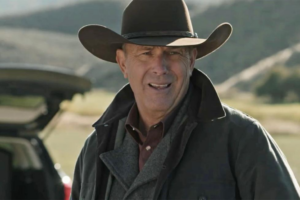
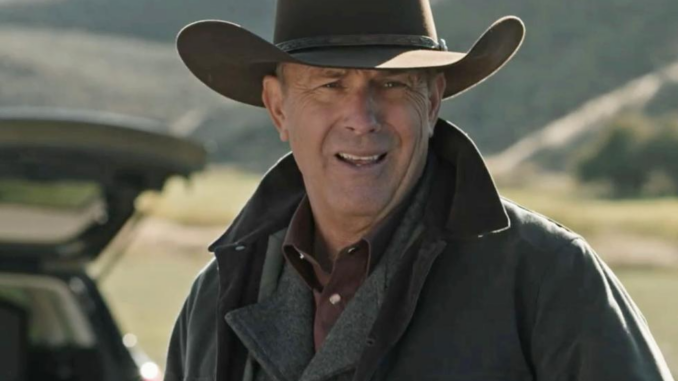
This line is particularly poignant when viewed through the lens of the 2026 season’s focus on legacy. For John Dutton, played with a weathered steeliness by Kevin Costner, the “old cowboy” is a mirror. While John isn’t a rodeo star, his life has been a different kind of arena—one where the bulls are land developers and the dirt is his own family’s heritage. The question suggests that the “cowboy way” is a self-consuming fire. You give the land your youth, your health, and your peace, and in return, it grants you a few moments of mastery and a lifetime of looking at the sunset through a haze of regret. The absence of “old rodeo cowboys” in the bunkhouse is a silent testament to the fact that this life has an expiration date that most do not survive with their dignity or mobility intact.
Technically, the use of this dialogue is a masterclass in character development. When veteran ranch hands like Lloyd use such lines, they aren’t just being cynical; they are being protective. For a character like Jimmy, who was desperate to prove his worth through the violence of the rodeo circuit, the question was a warning. It highlighted the intense moment of choice: do you want the fleeting roar of the crowd, or do you want to be able to walk when you’re fifty? The show’s brilliance in 2026 continues to be its ability to deconstruct its own mythology. It celebrates the bravery of the rider while simultaneously mourning the inevitable wreckage of the man.
Furthermore, the line resonates with the broader cultural themes of Yellowstone. It speaks to the vanishing nature of the West itself. If there are no “old rodeo cowboys,” perhaps it is because the world that created them is also disappearing. The high-rises of Bozeman and the paved paradises of the modern developers don’t have room for men with rodeo knees and sun-baked skin. The question becomes a metaphor for the ranch: have you ever seen an old version of something that was never meant to last in a changing world? It reinforces the sense of doom that hangs over the Dutton empire—a realization that they are fighting for a way of life that, by its very nature, breaks the people who live it.
As we reflect on the most powerful lines of the series, this one remains a fan favorite because it lacks the bravado of the “train station” threats or the corporate shark-talk of Beth Dutton. It is an honest, quiet moment of truth. It reminds us that the “Dutton Fury” and the grit of the bunkhouse come at a staggering price. Every time a young hand looks at a saddle with stars in their eyes, the ghost of that “old rodeo cowboy” stands in the corner, a reminder of the gravity that eventually claims everyone. In 2026, as Yellowstone prepares to close its final chapters, this line serves as the ultimate epitaph for the series: greatness is bought with the body, and the bill always comes due.