
Contents
- A Shadowy Reinvention Swings Into View
- Who Is Spider-Noir? A Hero Born in the Shadows
- A Visual Style That Feels Like a Graphic Novel Come to Life
- A Darker, More Brooding Protagonist
- Villains in the Fog
- Fan Reaction: Shock, Awe, and Intrigue
- Breaking Away From the Multiverse Noise
- The Power of Genre Fusion
- Why This Might Be Marvel’s Boldest Move Yet
- A City That Feels Alive — and Dying
- Final Thoughts: A Web Spun in Darkness
A Shadowy Reinvention Swings Into View
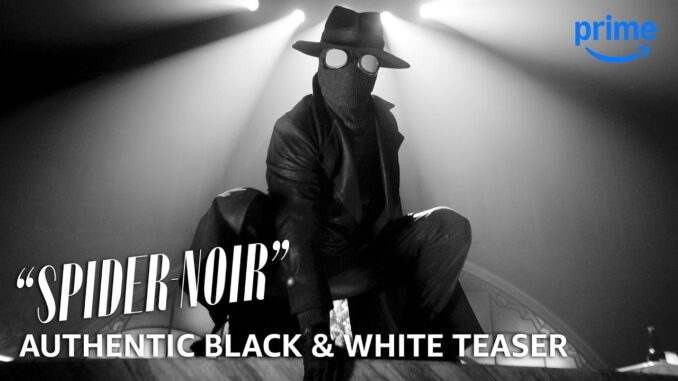
Marvel has officially unveiled the first trailer for Spider-Noir, and the reaction has been immediate, intense, and impossible to ignore. From its opening frames drenched in black-and-white grit to its haunting jazz-infused score, the footage signals something radically different from any previous Spider-Man adaptation. This isn’t bright skyscrapers and hopeful quips. This is rain-soaked pavement, moral ambiguity, and a hero who looks more detective than teenager.
Within hours of the trailer’s release, fans flooded social media with stunned reactions. Many described it as the boldest tonal shift Marvel has attempted in years — and possibly the darkest interpretation of Spider-Man ever brought to live action.
Who Is Spider-Noir? A Hero Born in the Shadows
For longtime comic readers, Spider-Noir isn’t entirely new. The character originated as part of Marvel’s alternate-universe storytelling, set in a 1930s-inspired world defined by crime syndicates and systemic corruption. Unlike the traditional Peter Parker, this version operates in a bleak environment where hope is fragile and justice comes at a cost.
The trailer leans heavily into that atmosphere. Instead of high-tech suits and colorful villains, we see trench coats, fedoras, and dimly lit alleyways. The web-slinger moves through smoke and shadow, less like a superhero celebrity and more like a lone investigator chasing ghosts through a broken city.
A Visual Style That Feels Like a Graphic Novel Come to Life
Perhaps the most striking element of the trailer is its aesthetic commitment. Nearly every frame feels ripped from a pulp-era comic panel. High-contrast lighting casts exaggerated shadows across brick walls and narrow corridors. The absence of vibrant color intensifies the mood, forcing viewers to focus on expressions, movement, and atmosphere.
The decision to embrace a noir palette isn’t just stylistic flair — it shapes the emotional tone of the entire story. Where traditional Spider-Man films rely on humor and spectacle, Spider-Noir appears to prioritize tension, mystery, and psychological depth.
The result is a trailer that feels more like a crime thriller than a superhero blockbuster.
A Darker, More Brooding Protagonist
One of the most talked-about aspects of the footage is the transformation of Spider-Man himself. Gone is the wisecracking optimism audiences have come to expect. In its place stands a hardened figure who seems burdened by the weight of the city’s decay.
His voiceover hints at loss and disillusionment, suggesting that this Spider-Man has seen too much to believe in simple victories. Rather than fighting for applause or public approval, he appears driven by something more personal — perhaps revenge, perhaps redemption.
That emotional heaviness has resonated strongly with fans, many of whom praised the trailer for daring to strip away the lighter elements typically associated with the character.
Villains in the Fog
While the trailer avoids revealing too much about the antagonists, it offers fleeting glimpses of shadowy figures operating behind the scenes. Silhouettes of crime bosses, whispered conspiracies, and a city seemingly owned by corruption all point to a narrative grounded in systemic injustice rather than superpowered chaos.
This grounded threat level makes the stakes feel intimate. Instead of a world-ending catastrophe, the danger lies in moral compromise and unchecked power — themes deeply aligned with classic noir storytelling.
Fans are already speculating about which iconic villains might appear reimagined through this darker lens.
Fan Reaction: Shock, Awe, and Intrigue
Within minutes of the trailer’s debut, hashtags related to Spider-Noir began trending. Reaction videos highlighted collective surprise at how far Marvel was willing to push the tone. Comments repeatedly used words like “unexpected,” “bold,” and “unsettling.”
Some longtime Spider-Man fans admitted they never imagined the character could fit so naturally into a gritty detective framework. Others celebrated the departure from formula, viewing it as a necessary evolution for a franchise that has seen multiple iterations in recent decades.
Of course, not all reactions were universally positive. A portion of the audience questioned whether stripping away humor risks losing the heart of Spider-Man. But even skeptics acknowledged that the trailer’s craftsmanship was undeniable.
Breaking Away From the Multiverse Noise
In an era saturated with multiverse narratives and interconnected timelines, Spider-Noir feels refreshingly self-contained. The trailer suggests a story that stands apart rather than serving as a puzzle piece in a larger crossover event.
That independence may prove to be its greatest strength. By focusing on atmosphere and character rather than franchise-building, the film has the opportunity to carve out a distinct identity.
Marvel’s willingness to experiment within its superhero catalog signals a broader shift — one that embraces genre blending and creative risk-taking.
The Power of Genre Fusion
What makes Spider-Noir particularly compelling is how seamlessly it merges superhero mythology with classic film noir conventions. The trench coat and fedora aren’t mere costume changes; they symbolize a philosophical shift. This is a world where right and wrong blur together, where justice isn’t clean, and where victory often feels hollow.
The trailer’s moody soundtrack and deliberate pacing reinforce that shift. Scenes linger longer than typical action cuts, allowing tension to build gradually. Every glance and every shadow seem intentional.
This genre fusion could redefine how audiences perceive not only Spider-Man, but superhero storytelling more broadly.
Why This Might Be Marvel’s Boldest Move Yet
Marvel has built its empire on colorful spectacle and interconnected storytelling. Venturing into monochrome moral complexity represents a significant departure from that formula.
If successful, Spider-Noir could open the door to even more stylistic experimentation within the Marvel universe. It proves that superhero films don’t have to adhere to a single tonal template.
The trailer’s confidence suggests that the creative team understands the risk — and is embracing it fully.
A City That Feels Alive — and Dying
Beyond the protagonist, the city itself emerges as a character. Rain slicks the streets. Newspaper headlines hint at scandal and decay. Dim streetlamps flicker against endless night.
The urban landscape doesn’t feel like a backdrop; it feels oppressive, almost predatory. That sense of environmental storytelling elevates the trailer from promotional material to immersive experience.
Fans have already begun analyzing specific frames for hidden details and thematic clues, demonstrating how deeply the aesthetic has captured attention.
Final Thoughts: A Web Spun in Darkness
The first trailer for Spider-Noir doesn’t just introduce a new interpretation of Spider-Man — it challenges expectations about what a Marvel project can look and feel like. Dark, deliberate, and stylistically fearless, it has left fans completely shook.
Whether this bold reinvention becomes a critical triumph or a divisive experiment remains to be seen. But one thing is certain: Marvel has everyone talking.
And in a crowded entertainment landscape, commanding that level of attention might be the most powerful superpower of all.