
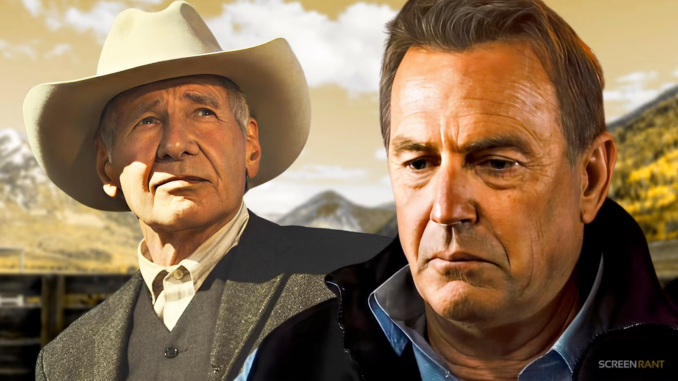
The dust has finally settled over the Big Sky country, but the air remains thick with the scent of gunpowder and betrayal. For years, Yellowstone has been more than just a television show; it has been a cultural phenomenon that redefined the modern Western. As the sun sets on the final chapter of the Dutton family saga, fans are left grappling with the wreckage of a dynasty that lived by the sword and, inevitably, felt the sting of its edge. The season finale wasn’t just a conclusion; it was a reckoning that asked how much blood is required to keep a kingdom.
The tension leading into the finale was palpable. With John Dutton’s political and personal enemies closing in from all sides, the stakes had shifted from land disputes to pure survival. The central question that haunted every episode of this final stretch was whether the ranch could outlive the man who sacrificed everything for it. In the end, the answer was as cold and unforgiving as a Montana winter. The legacy of the Duttons has always been built on a foundation of secrets, and in the closing moments, those secrets finally collapsed the house.
The most shocking aspect of the finale was the sheer finality of the character arcs. For seasons, we watched Beth and Jamie Dutton engage in a psychological and legal war that felt like it could last forever. However, the finale stripped away the metaphors. The path of destruction Jamie set himself on—driven by a lethal cocktail of resentment and a desperate need for approval—reached its terminal point. In a series defined by Shakespearean tragedy, Jamie’s end felt both earned and devastating. He was a man who tried to kill his father’s shadow, only to realize he was standing in the middle of a burning bridge with no way back.
Then there is the matter of the patriarch. John Dutton has always been the gravity around which every other character orbits. Without his presence, the ranch feels like a ghost ship. The finale handled the vacuum left by his departure with a somber, almost poetic stillness. It wasn’t just about who died in a physical sense, but about the death of an era. The cowboy way of life, which John defended with such ferocity, felt more fragile than ever. The survival of the ranch now rests on shoulders that are weary and hearts that are hardened beyond repair.
Beth Dutton, the undisputed force of nature, found herself at a crossroads that no amount of sharp-tongued wit could navigate. Her survival has always been tied to her loyalty to her father, and with that anchor gone, we saw a version of Beth that was unmoored. The finale didn’t just give us body counts; it gave us the death of hope for a peaceful resolution. The survivors are left with the land, yes, but they are also left with the crushing weight of the bodies buried beneath it. Kayce, caught between his duty to his family and his desire for a quiet life, remains the moral compass of a world that has lost its north star.
The technical execution of the finale mirrored the internal chaos of the characters. The cinematography captured the vast, indifferent beauty of the landscape—a stark contrast to the petty, violent machinations of the people trying to own it. The pacing was deliberate, allowing the gravity of each loss to sink in before moving to the next. It wasn’t a finale filled with mindless action; it was a finale filled with consequence. Every bullet fired and every contract signed felt like a nail in the coffin of the Dutton legacy as we knew it.
As the credits rolled, the feeling wasn’t one of triumph, but of exhaustion. Yellowstone succeeded because it never shied away from the cost of power. It showed us that you can win the war for the land and still lose your soul in the process. The “Dutton Legacy” might continue in name, but the fire that fueled it has been extinguished. Who didn’t survive? In truth, the version of the family that believed they were untouchable is what perished. They are no longer a dynasty; they are a cautionary tale etched into the dirt of the valley.
The ending of Yellowstone serves as a powerful reminder that all empires eventually crumble. Whether it’s through the betrayal of a brother or the relentless march of progress, the ranch has changed forever. Fans will likely spend years debating the fates of their favorite characters, but the ultimate survivor is the Montana wilderness itself—ancient, silent, and entirely unimpressed by the men who fought to claim it. The legacy ends not with a bang, but with the haunting realization that the land always wins.