
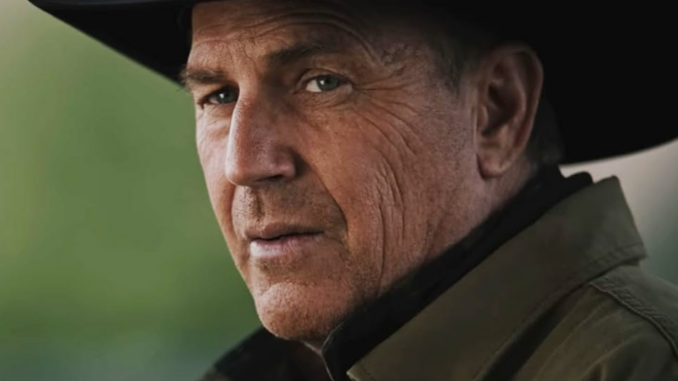
“Marshals” episode 7 sees Tom Weaver (Chris Mulkey) visit Kayce Dutton (Luke Grimes) and offer to buy his land. During their meeting, Tom points out how Kayce’s father failed to make the Yellowstone Ranch profitable, highlighting a major criticism of Kevin Costner’s John Dutton.
“Marshals” started by killing off Kelsey Asbille’s Monica Dutton in the worst way possible, and in March 2026, we learned a big part of the reason why. A report claimed that Monica’s death came down to Paramount needing to differentiate “Marshals” from “Yellowstone” in order to retain streaming rights. That’s somewhat surprising, if only because the spin-off hasn’t otherwise been afraid to embrace its heritage.
So far, “Marshals” has acknowledged random “Yellowstone” storylines and even borrowed plot points from Taylor Sheridan’s massively popular neo-Western series. At one point, Kayce and his Marshals team came dangerously near the Train Station dumping ground from the mothership series. All of that is a testament to the fact that, despite having to kill Monica, showrunner Spencer Hudnut and his writers aren’t afraid to look back at the show that started it all.
That continued in episode 7, which saw Weaver visit Kayce at his East Camp home and try to sweet-talk his host into handing over his land. During their dinnertime sit-down, Kayce tells Weaver that he believes the old ways of ranching are still the best, to which Weaver replies, “From what I hear, the old ways included the Yellowstone never turning a profit.” This brief moment encapsulates one of the biggest criticisms of John Dutton and his commitment to retaining the Yellowstone Ranch at all costs. What’s more, it raises an important question about how Kayce’s future might play out.
Marshals highlights John Dutton’s shortsightedness
The events of “Yellowstone” are, in a way, all the result of John Dutton promising his own father that he would keep the Dutton Ranch in the family. Every season of the show revolved around a conflict over the ranch itself, with the Duttons fending off multiple would-be buyers and nefarious forces looking to take over the land and end the Dutton dynasty. While John Dutton’s refusal to sell or cede his land was a big part of what made him a hero for many viewers, it was also one of his biggest shortcomings. His stubbornness led to untold drama, conflict, and, ultimately, tragedy.
At times, this steadfastness became excruciatingly frustrating, like when John turned down exorbitant offers for his land. In season 3, the Dutton patriarch was offered $500 million by Market Equities CEO Willa Hayes (Karen Pittman) and real estate investor Roarke Morris (Josh Holloway). He refused to take it, telling Beth Dutton (Kelly Reilly), “I made a promise and I’d rather lose it than break it.”
As a result of John’s refusal to budge, the Dutton family remained cash-poor but land-rich, as alluded to by Tom Weaver in “Marshals” episode 7. At the dinner table, Weaver confirms that John’s entire operation never made a profit, and in this moment, we’re reminded that while Costner’s exalted rancher is often seen as a hero, he was arguably misguided when it came to the most crucial aspect of “Yellowstone.” That’s to say nothing of the awful things the Duttons have done at the behest of their patriarch.