
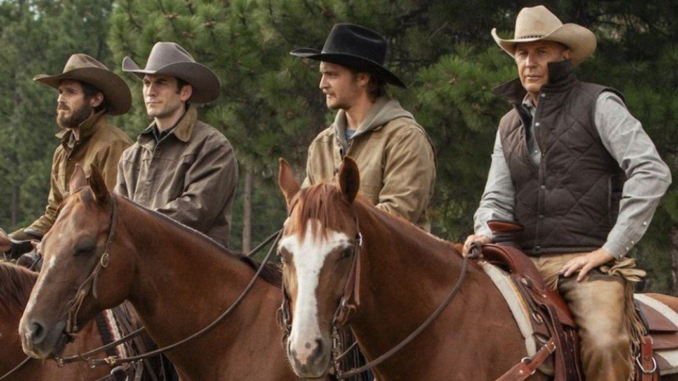
The sweeping landscapes of Montana have long served as the backdrop for one of modern television’s most enduring sagas, but as Paramount officially confirms the return of Yellowstone, the atmosphere feels markedly different. For years, the Dutton family has fought off land developers, political rivals, and internal betrayal to preserve their ancestral ranch. However, the announcement of the final episodes brings with it a bittersweet realization: the ranch we return to will never truly be the same again. This shift isn’t just about the plot; it is a fundamental transformation of the show’s identity, driven by off-screen drama and a narrative crossroads that marks the end of an era for the neo-Western genre.
The most significant change looming over the upcoming episodes is, of course, the absence of Kevin Costner. As John Dutton, the stoic patriarch whose shadow loomed over every acre of the ranch, Costner was the gravity that held the series together. His departure following a highly publicized scheduling conflict and creative differences has left a void that the show must now navigate. Without John Dutton at the helm, the stakes have shifted from “defending the legacy” to “surviving the fallout.” The narrative weight now rests heavily on the shoulders of the remaining Dutton siblings—Beth, Kayce, and Jamie—whose internecine warfare has always been the show’s secondary engine but must now become its primary focus.
The internal dynamics of the family are primed for an explosive conclusion. Beth Dutton, played with razor-sharp intensity by Kelly Reilly, has spent seasons acting as her father’s blunt-force instrument. Without his tempering influence, her scorched-earth tactics against her brother Jamie are likely to reach a devastating crescendo. Jamie, meanwhile, has been pushed into a corner where his only path to survival is the total dismantling of the family legacy he once sought to protect. This isn’t just a battle for land anymore; it’s a Shakespearean tragedy played out in Wranglers and Stetson hats. The ranch, once a symbol of heritage and stability, has become a gilded cage for a family that can no longer find common ground.
Beyond the family friction, the broader world of Yellowstone is also evolving. The show has always been praised for its visceral depiction of the tension between the “Old West” and the creeping encroachment of modernity. As we head toward the finale, that tension feels more urgent than ever. The political landscape of Montana, which John Dutton tried to control from the Governor’s office, is shifting. The tribal interests led by Thomas Rainwater and the corporate behemoths looking to turn the wilderness into a playground for the elite are closing in. With the patriarch gone, the “Old West” feels more like a ghost than a living reality. This thematic shift suggests that the show’s conclusion won’t just be about who wins the ranch, but whether the ranch can even exist in the 21st century.
Paramount’s strategy for the franchise also signals a new chapter. While the main series concludes, the Yellowstone universe is expanding at an unprecedented rate. Prequels like 1883 and 1923 have already deepened the lore, and upcoming spin-offs like 6666 and the rumored sequel series starring Matthew McConaughey suggest that the brand will live on, even if the original story dies. This industrial expansion reinforces the idea that the specific era of the Dutton Ranch we fell in love with is over. We are transitioning from a singular character study of John Dutton into a sprawling cinematic universe where the ranch is merely a setting rather than the soul of the story.
Fans who have stuck with the series since 2018 are bracing for a finale that promises to be as uncompromising as the landscape itself. Creator Taylor Sheridan has never been one for easy resolutions or happy endings. The return of Yellowstone is less a homecoming and more a final stand. It is a chance to see if Beth and Rip can find a semblance of peace, if Kayce can reconcile his duty with his conscience, and if the land can finally be free of the blood spilled to keep it.
The ranch will never be the same because the world around it has changed, and the family within it has broken beyond repair. As the cameras roll on these final chapters, the anticipation is fueled by a sense of finality. Yellowstone changed the face of prestige television by proving that there was a massive, underserved audience for rugged, rural storytelling. Now, it faces its greatest challenge: saying goodbye to its leader while trying to cement a legacy that will survive long after the final credits roll. The king may be gone, but the battle for the kingdom is only just beginning.