
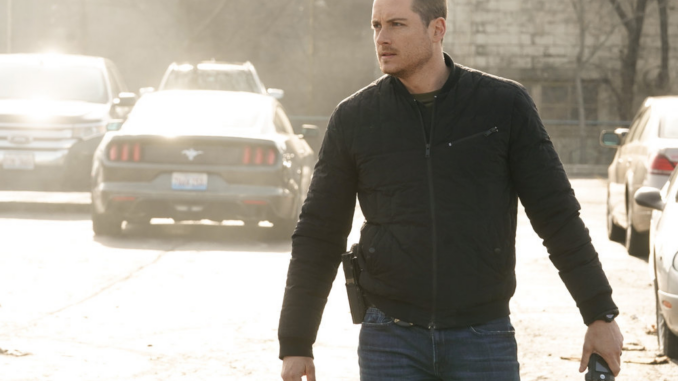
The departure of Detective Jay Halstead from the Intelligence Unit remains one of the most polarizing and discussed moments in the history of the One Chicago franchise. For ten seasons, Jesse Lee Soffer portrayed the former Army Ranger with a stoic intensity that served as the moral anchor for Chicago P.D. When he finally handed in his badge, the shockwaves felt by the fans were matched only by the confusion surrounding his character’s sudden decision to return to the military in Bolivia. To understand why Jay Halstead really left, one must look past the surface-level plot points and examine the deep-seated psychological erosion of a man who could no longer recognize himself in the mirror.
For years, Halstead was the foil to Sergeant Hank Voight. He was the voice of reason, the defender of the rule of law, and the man who believed that the ends did not always justify the means. However, the gritty reality of policing in Chicago eventually began to chip away at that idealistic exterior. The truth behind his exit is rooted in a slow-burn identity crisis. Jay had spent years trying to change Voight, only to realize that the system and the city were instead changing him. He found himself covering up crimes, lying to federal agents, and operating in a moral gray area that contradicted everything he stood for as a soldier and an officer.
The breaking point came during a tense investigation where Jay realized he had become the very thing he once despised. He saw his marriage to Hailey Upton becoming collateral damage in his descent into darkness. The decision to leave wasn’t just about a job offer from the Army; it was a desperate act of self-preservation. Jay needed to go back to a world where the lines between right and wrong were clearly defined by a chain of command and a mission. In his mind, leaving Chicago was the only way to save what was left of his soul, even if it meant leaving behind the woman he loved and the life he had built.
Behind the scenes, the departure was equally significant. Jesse Lee Soffer had reached a point where he felt he had explored every facet of Jay’s character. For an actor, ten years in a procedural is an incredible run, but it also carries the risk of creative stagnation. The decision for Soffer to move on was a mutual one with the production team, aimed at allowing the actor to pursue directing and new roles while giving the show a chance to reinvent its internal dynamics. This real-world necessity translated into a narrative that forced the Intelligence Unit to evolve without its primary moral compass.
The fans, however, found the truth difficult to swallow because of how it impacted the beloved Upstead relationship. The departure felt like a betrayal of the growth Jay and Hailey had achieved together. By choosing to extend his stay in Bolivia indefinitely and eventually cutting off communication, the writers took a hero and turned him into a ghost. This narrative choice revealed a harsh truth about the One Chicago universe: that the job eventually takes everything from you. Whether through death or disillusionment, no one leaves Intelligence unscathed. Jay’s exit was a manifestation of the trauma he had suppressed since his time in the 75th Ranger Regiment, resurfacing at a time when he felt he had lost his way in the civilian world.
Since his departure, the void left by Halstead has been palpable. The show has shifted toward a darker, more isolated tone, highlighting just how much Jay’s presence balanced the scales. The truth of his exit serves as a cautionary tale about the cost of heroism in a broken system. It wasn’t a lack of love for Chicago or his team that drove him away, but a realization that he could no longer be the man they needed him to be while staying in the shadows of Voight’s world.
Ultimately, Jay Halstead’s goodbye was the final act of a man trying to reclaim his integrity. While the heartbreak of his absence continues to linger for viewers, the internal logic of his character remains consistent. He was a soldier at heart, and when the domestic battlefield became too cluttered with lies and compromises, he returned to the only life that ever made sense to him. The tragedy of his exit isn’t that he left, but that he had to go so far away just to find himself again. As the series moves forward, the memory of Halstead continues to haunt the halls of the 21st District, a reminder of the high price of maintaining one’s conscience in a city that demands total surrender.