
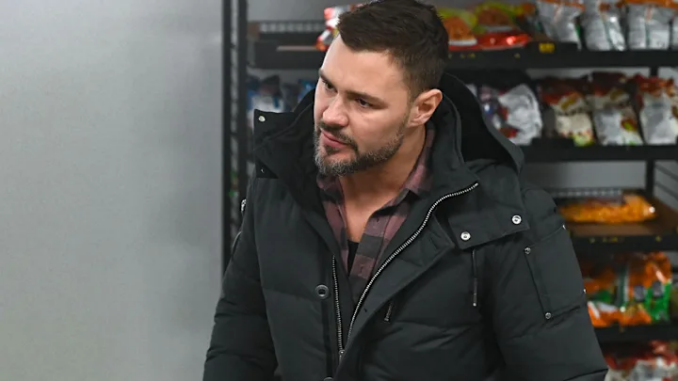
The shadows of Chicago have always been a repository for secrets, but for Adam Ruzek, the past is no longer content to remain buried beneath the city’s concrete. In the high-octane world of the One Chicago franchise, the Intelligence Unit is often portrayed as a sanctuary of brotherhood and shared history, yet it is also a place where the ghosts of old mistakes eventually come to collect their due. As the latest chapter of Chicago PD unfolds, a long-forgotten chapter of Ruzek’s early life resurfaces, casting a cold and unforgiving light on the man he has become and the life he has meticulously constructed within the 21st District.
Adam Ruzek is widely known as the emotional engine of the unit, a man who leads with his heart and often acts on impulse to protect those he considers family. However, this fierce loyalty is now being tested by a revelation that dates back to a time before he was handpicked by Hank Voight. When an old acquaintance from his pre-academy days reappears as a person of interest in a federal investigation, the thin veneer of Ruzek’s current identity begins to crack. The truth involves a series of decisions made in the desperation of youth—choices that at the time felt like survival but now look like betrayal to the badge he wears so proudly.
The brilliance of this narrative arc lies in the way it forces Ruzek into a state of profound isolation. Usually, when a member of Intelligence is in trouble, the unit closes ranks, creating an impenetrable wall against the outside world. But because this secret predates his time with Voight, Halstead, and Burgess, Ruzek feels he cannot lean on the very people who define his existence. He is trapped in a psychological cage, navigating a landscape where every conversation feels like an interrogation and every glance from a colleague feels like a suspicion. The internal pressure is suffocating, as he realizes that the foundation of trust he has built over the years is resting on a fault line he never disclosed.
As the federal investigation narrows its focus, the tension within the precinct reaches a breaking point. Ruzek is forced to lead a double life, performing his duties with his usual bravado while secretly meeting with figures from his past to keep the truth from leaking out. This duality is a heavy burden, and the audience can see the physical and emotional toll it takes on him. His interactions with Kim Burgess, in particular, are fraught with an unspoken grief. He knows that if the truth comes out, it won’t just be his career at stake; it will be the respect of the woman he loves and the future they have tried to build together.
The One Chicago universe has always excelled at exploring the concept of redemption and whether a person can ever truly outrun their origins. For Ruzek, the question is whether his years of service and the lives he has saved can outweigh a single, devastating mistake from his past. Hank Voight, a man who has buried more secrets than most, begins to sense the shift in his protégé. The dynamic between the mentor and the student becomes a focal point of the drama, as Voight’s brand of justice often involves a shovel and a silent pact. Yet, even Voight’s influence has limits when the federal government is involved, leaving Ruzek to wonder if even the king of the gray area can save him this time.
The narrative reaches its crescendo in a series of clandestine meetings and high-stakes confrontations that take place in the dimly lit corners of the city. Ruzek is forced to decide how far he is willing to go to keep his secret. Does he compromise his current integrity to protect his past, or does he confess and face the total destruction of his professional world? The truth is a relentless hunter, and as the episode progresses, it becomes clear that there is no escape. The walls are closing in, and the very skills Ruzek used to hunt criminals are now being used to track his own movements.
By the time the final act unfolds, the atmosphere is one of tragic inevitability. The sunrise over the Chicago skyline does not bring the usual sense of hope; instead, it signals a day of reckoning. Ruzek’s secret is no longer just a memory; it is a weapon that has been pulled from the holster. The show leaves the audience with a chilling contemplation on the nature of identity and the permanence of our choices. Can a man truly be defined by his current actions if his past remains a lie? As Ruzek stands at the edge of the truth, he realizes that the hardest person to escape isn’t the feds or the ghosts of his youth—it is himself. The legacy of the 21st District hangs in the balance, proving once again that in Chicago, the past is never truly past; it is just waiting for the right moment to strike.