
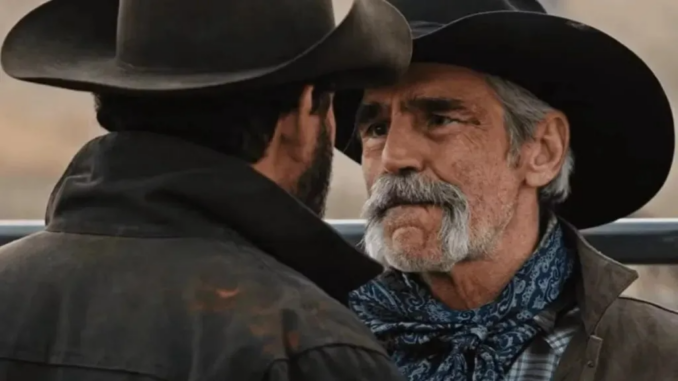
The sprawling expanse of the Yellowstone Dutton Ranch is built on silence and secrets, a place where the past is often buried deep beneath the Montana soil. Among the rugged men who call the bunkhouse home, none embody the stoic, weathered spirit of the ranch more than Lloyd Pierce. As the oldest ranch hand and a beacon of institutional knowledge, Lloyd has spent decades as John Dutton’s most reliable shadow. He is a man of few words and even fewer complaints, a branded loyalist who has witnessed every dark deed required to keep the empire intact. However, the true weight of the series often shifts toward the quietest corners of the ranch, and everything changes when Lloyd Pierce confronts a past that refuses to stay buried any longer. This internal and external reckoning transforms Lloyd from a background mentor into a tragic figure grappling with his own obsolescence and the ghosts of the life he chose.
Lloyd’s presence on the ranch is usually a symbol of stability. He is the bridge between the old guard and the new generation of branded men like Rip Wheeler and Kayce Dutton. Yet, beneath the layers of denim and grit lies a history of sacrifice that the show begins to peel back as the modern world encroaches on the valley. For Lloyd, the ranch is not just a job; it is a sanctuary that saved him, much like it did for Rip. But sanctuary often comes with a ledger of debts that can never be fully settled. When the bunkhouse hierarchy is disrupted by the arrival of new personalities and shifting loyalties, Lloyd’s carefully constructed sense of belonging begins to crack. The past he tried to outrun—the sacrifices he made and the family he never had—starts to bleed into his present, forcing him to realize that even the most loyal soldier can eventually be forgotten by the cause they serve.
The tension reaches a boiling point when Lloyd’s veteran status is challenged. In a world that prizes youth and raw power, an aging cowboy like Lloyd becomes a living reminder of the toll the ranch takes. His confrontation with the past is not just about old memories, but about the realization that the rules of the frontier are changing. He finds himself caught in a cycle of jealousy and pride, particularly as he watches younger men take the lead in ways he once did. This friction leads to an explosion of violence that shatters the peace of the bunkhouse, proving that the scars Lloyd carries are not just physical brands but deep psychological wounds. For the first time, we see the cracks in his armor, revealing a man who is terrified of a future where he is no longer needed.
This narrative shift allows Yellowstone to explore the theme of legacy from a different perspective. While the Duttons fight for the land, Lloyd fights for his dignity and his place in the only world he knows. His struggle highlights the inherent cruelty of the branding system; it offers a home, but it also demands a level of isolation from the rest of society that makes the outside world terrifying. When Lloyd’s past refuses to stay buried, it forces the other characters to look in the mirror. Rip Wheeler, who views Lloyd as a father figure, is forced to choose between the rules of the ranch and the man who taught him how to survive. This creates a heartbreaking rift that threatens the unity of the bunkhouse, showing that even the strongest bonds can be severed by the weight of unaddressed history.
The brilliance of Lloyd’s character arc lies in its quiet tragedy. He represents the millions of people who have dedicated their lives to a singular purpose, only to find that the world has moved on without them. The Montana landscape, usually so beautiful, begins to feel like a cage for Lloyd as he navigates his resentment and his deep-seated loyalty. The show masterfully uses his storyline to ground the high-stakes political drama in a very human experience. It reminds the audience that the “dirty work” of the ranch has a human cost that persists long after the bodies are buried. Lloyd’s journey is a meditation on aging, the search for redemption, and the impossibility of truly starting over once you have given your life to the Dutton name.
As the series moves forward, Lloyd’s presence serves as a cautionary tale for the younger ranch hands. His struggle to reconcile his past with his present reality creates a ripple effect, forcing everyone in the bunkhouse to question their own futures. If a man as loyal and capable as Lloyd can find himself on the brink of losing everything, what hope is there for the rest of them? This sense of impending doom adds a layer of depth to the show, elevating it from a standard western to a complex character study. Lloyd Pierce becomes the soul of the ranch’s darker side, a man who knows where all the bodies are buried because he helped put them there, and who now fears that there might be a spot waiting for him.
Ultimately, the story of Lloyd Pierce is about the endurance of the human spirit under the heaviest of burdens. By confronting a past that refuses to stay buried, Lloyd finds a strange kind of liberation, even if it comes through pain and conflict. He is forced to reclaim his identity not just as a branded hand, but as a man with his own history and his own worth. His evolution is a vital part of the Yellowstone mythos, proving that while the land may be the prize, the people who work it are the ones who truly pay the price. In the end, Lloyd remains a sentinel of the old West, a man who has seen the sun rise and set over the Yellowstone for decades, carrying the secrets of the past in his heart until the very end.