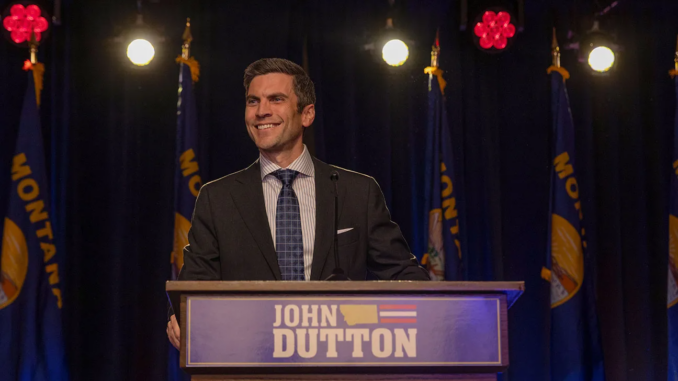
The internal collapse of the Dutton empire has long been forecasted by the growing shadow of Jamie Dutton, a character whose complexity and internal torment have provided some of the most compelling drama in modern television. As Yellowstone enters its final stages, the long-brewing tension between Wes Bentley’s Jamie and the rest of the family has finally fractured into an outright war. This isn’t just another sibling rivalry or a temporary fallout; it is a calculated, definitive betrayal that shifts the entire foundation of the series. By turning against his father and sister, Jamie has transitioned from a reluctant accomplice into the most dangerous threat the Yellowstone ranch has ever faced, proving that the deadliest enemies are often the ones who know your darkest secrets.
Wes Bentley has spent years portraying Jamie as a man trapped between two worlds, constantly seeking the approval of a father who treated him as a tool rather than a son. This emotional neglect, combined with the relentless psychological and physical abuse from his sister Beth, created a reservoir of resentment that was bound to overflow. The turning point came when Jamie realized that his loyalty would never be rewarded with genuine love or a seat at the table of the family legacy. This realization transformed his desperation for acceptance into a cold, sharp hunger for survival and revenge. His decision to move against the family is the culmination of a decade of being marginalized, and it represents a total rejection of the Dutton brand that he once fought so hard to protect.
The nature of this betrayal is particularly devastating because it is being fought on Jamie’s home turf: the legal and political arenas. While the other Duttons rely on land, cattle, and physical intimidation, Jamie understands that the true power in the modern West lies in legislation, public image, and the stroke of a pen. By using his position as Attorney General to target the ranch’s protections and even exploring the impeachment of his father, John Dutton, Jamie is attacking the family where they are most vulnerable. He isn’t just trying to hurt them; he is trying to dismantle the very identity of the Yellowstone. This strategic betrayal is what makes Jamie so terrifying as an antagonist because he is the only person capable of destroying the ranch without firing a single shot.
Beth Dutton remains the primary catalyst for Jamie’s descent into darkness. Their relationship, defined by a secret trauma from their youth, has reached a point where mutual destruction feels inevitable. The trailer and recent narrative arcs suggest that Jamie has finally found the leverage he needs to strike back at Beth, moving past his fear of her and embracing his own capacity for cruelty. When Jamie turns against the family, he is specifically turning against the version of himself that allowed Beth to control him. This shift in power dynamics creates a high-stakes game of cat and mouse where the winner takes the entire valley. The betrayal isn’t just about politics; it is a deeply personal attempt to reclaim his own agency and prove that he is more than just the family’s fixer.
The impact of Jamie’s betrayal reaches far beyond the family dinner table. It creates a massive power vacuum that corporate entities and rival developers are eager to fill. By fracturing the Dutton front, Jamie has inadvertently—or perhaps intentionally—invited the vultures to descend on the land. This makes his betrayal a catalyst for the end of an era. If the Duttons cannot stand united, the ranch cannot survive the modern world’s encroachment. Jamie’s move is the final blow to the myth of the unified frontier family, exposing the rot at the center of the dynasty and showing that the legacy John Dutton fought for was built on a foundation of sand.
Audiences are left grappling with a profound sense of conflict regarding Jamie’s actions. While his betrayal is undeniably destructive, Bentley’s performance makes it difficult to view him as a simple villain. We have seen the years of exclusion and the moments of genuine heartbreak that led him to this edge. His turn against the family feels like a tragic inevitability—a monster created by the very people now trying to destroy him. This moral ambiguity is what makes Yellowstone such a successful drama; it forces the viewer to question whether the Duttons actually deserve to win or if Jamie’s betrayal is a form of poetic justice for a family that prioritized land over its own children.
As the series concludes, the showdown between Jamie and the rest of the clan will serve as the ultimate test of the Yellowstone legacy. Whether Jamie succeeds in tearing down the gates or meets a violent end at the hands of those he betrayed, the damage is already done. He has proven that the ranch’s greatest vulnerability was never the outsiders, but the son who was never allowed to belong. The betrayal that changes everything is not just a plot point; it is the final, agonizing breath of a dying empire, fueled by the vengeance of a man who finally decided that burning the house down was better than living in its shadows.