
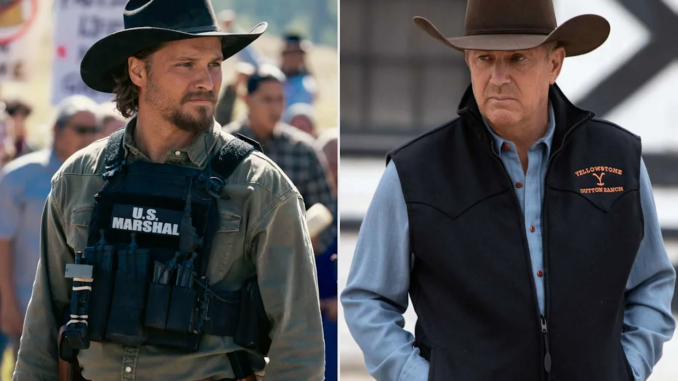
The rugged landscapes of Montana have long served as the backdrop for one of the most gripping dramas in modern television history. Yellowstone has redefined the Western genre, blending corporate intrigue with the visceral reality of ranching life. At the heart of this sprawling epic is John Dutton, the iron-willed patriarch of the Dutton family, whose relentless pursuit of legacy has often come at a staggering personal cost. As the series hurtles toward its conclusion, the central question looming over the Bitterroot Valley is whether we are witnessing John Dutton’s final stand. Kevin Costner’s iconic character now faces his darkest hour yet, caught in a pincer movement of political betrayal, family fragmentation, and the unstoppable march of progress.
John Dutton has always been a man out of time. He represents a fading era of American history where land was held through grit and blood rather than litigation and lobbyists. Throughout the seasons, we have seen him survive assassination attempts, cancer scares, and the constant threat of eminent domain. However, the current stakes feel fundamentally different. The darkness surrounding John in this final chapter isn’t just external; it is existential. For the first time, the walls of the Yellowstone ranch—the very kingdom he sacrificed his soul to protect—seem to be closing in from the inside.
The departure of Kevin Costner from the series has added a meta-textual layer of tension to the narrative. Fans are no longer just wondering if John Dutton can win; they are wondering how he will fall. This uncertainty has charged every scene with a sense of impending doom. John’s darkest hour is characterized by a profound isolation. His children, once his soldiers, are now either broken by his expectations or actively plotting his downfall. Jamie Dutton, the black sheep driven by a cocktail of resentment and ambition, has finally crossed the rubicon, initiating a legal and political war that John cannot simply outshoot. Meanwhile, Beth, John’s most loyal and lethal weapon, is consumed by a vendetta that threatens to burn down the very house she is trying to save.
What makes this “final stand” so compelling is Costner’s nuanced performance. He portrays John not as a hero, but as a tragic figure who realizes too late that the price of his legacy might be the destruction of his family’s peace. The ranch has become a beautiful prison. In his darkest hour, we see a John Dutton who is tired. The weight of the Stetson seems heavier, and the silences between his commands are filled with the ghosts of those he lost along the way. He is fighting for a way of life that the rest of the world has already decided is obsolete, making his defiance both heroic and deeply heartbreaking.
The external pressures are equally suffocating. Market Equities and the relentless expansion of nearby Bozeman represent a tide of “new money” and urban sprawl that John’s traditional methods cannot stem. In previous seasons, John could rely on his status as the Livestock Commissioner or his sheer intimidation factor. Now, as Governor, he is finding that the halls of power are filled with shadows he cannot control. His political enemies are not just looking to take his land; they are looking to dismantle his reputation and erase the Dutton name from the history books.
As the sun begins to set on the Dutton empire, the tension is at an all-time high. Will John Dutton go out in a literal blaze of glory, defending his borders with a rifle in hand? Or will his end be more quiet and tragic, a man left alone in a vast valley that no longer recognizes him? The “Darkest Hour” suggests that there are no clean victories left for John. Every move he makes to secure the ranch further alienates the people he loves. The tragedy of John Dutton is that he built a fortress to keep the world out, only to realize he accidentally locked himself in with his own demons.
Yellowstone has always been a show about the cost of power and the burden of the past. As we approach the endgame, the focus on John Dutton’s final stand is a reminder that even the most formidable giants must eventually face the winter. Kevin Costner has crafted a character for the ages—a complicated, flawed, and fiercely principled man who defines himself by the dirt beneath his boots. Whether he survives the coming storm or becomes a part of the Montana soil he loves so much, one thing is certain: the conclusion of John Dutton’s journey will be as explosive and uncompromising as the man himself.