
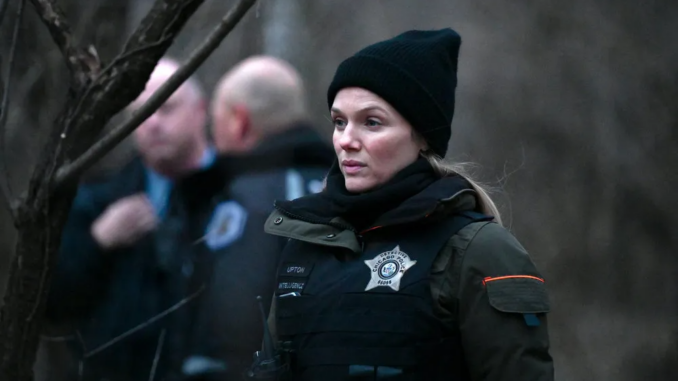
The evolution of Hailey Upton in Chicago P.D. has been one of the most harrowing and meticulously crafted character studies in modern procedural television. While the show is known for its high-octane chases and gritty crime scenes, the true gravitational pull of recent seasons has been the internal collapse of Detective Upton. This narrative arc reached its zenith in a series of episodes that showcased Tracy Spiridakos delivering a heart-shattering performance, one that transcended the typical boundaries of a police drama. As Upton’s world began to unravel, Spiridakos portrayed a woman caught in a devastating downward spiral, struggling to maintain her professional composure while her personal life and moral foundation disintegrated. The raw vulnerability displayed on screen was not just a plot point; it was a masterclass in acting that captured the profound isolation of a character who had finally reached her breaking point.
To understand the weight of this breakdown, one must look at the immense pressure Upton has endured since joining the Intelligence Unit. She was initially introduced as a principled, by-the-book detective, but her proximity to Hank Voight and the inherent darkness of the job gradually eroded her boundaries. The departure of her husband, Jay Halstead, acted as the final catalyst for her emotional decay. Spiridakos expertly channeled this abandonment not through loud, theatrical outbursts, but through a quiet, vibrating intensity. We saw Upton burying herself in work, taking on extra shifts, and running herself into the ground to avoid the silence of an empty apartment. The brilliance of the performance lay in the subtle details—the tremor in her hands during a briefing, the hollow look in her eyes after a grueling case, and the way her voice cracked just enough to show the audience that she was barely holding it together.
The tension finally exploded in moments of visceral, unscripted emotion that left viewers breathless. There is a specific kind of pain in watching a character who prides herself on being strong and capable finally admit that she is not okay. Spiridakos navigated these scenes with an authenticity that felt almost uncomfortably real. Whether she was facing off against Voight in a moment of shared trauma or sitting alone in her car after a near-death experience, the actress conveyed a sense of exhaustion that went deeper than just physical tiredness. It was a soul-deep fatigue. The breakdown wasn’t a single event but a slow, painful shedding of the armor she had worn for years. This vulnerability made Upton more relatable than ever, shifting her from a stoic law enforcement figure to a deeply wounded human being searching for a way back to herself.
Furthermore, the impact of this performance resonated through the entire Intelligence Unit. As Upton fractured, the dynamics of the team shifted. Her colleagues watched with a mix of concern and helplessness, reflecting the audience’s own anxiety. The show used her mental health struggle to highlight the often-ignored reality of police work—the fact that you cannot stare into the abyss every day without the abyss eventually staring back. Spiridakos ensured that every tear shed and every panicked breath felt earned. She didn’t just play a detective having a bad day; she portrayed the cumulative weight of years of trauma, secrets, and loss. It was a brave portrayal that refused to offer easy answers or a quick fix, staying true to the gritty, uncompromising tone of the One Chicago world.
Ultimately, Hailey Upton’s breakdown serves as a poignant reminder of the human cost of the badge. Tracy Spiridakos gave a performance that will be remembered as a highlight of the series, providing a voice to the silent struggles of those who sacrifice their mental well-being for the sake of others. As she navigated the wreckage of her character’s life, she invited the audience to feel every ounce of her grief and frustration. This wasn’t just a story about a cop losing her way; it was a story about the resilience required to survive in a broken world. The emotional depth brought to the screen ensures that even as characters come and go, the legacy of Upton’s journey will remain a cornerstone of Chicago P.D. history.