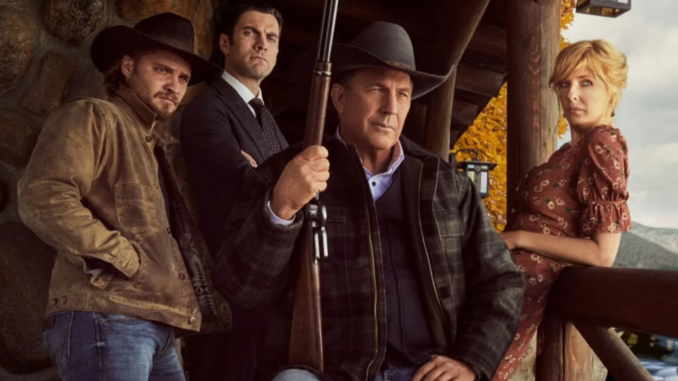
The sprawling landscape of the Yellowstone ranch has always been a battlefield where loyalty is the only currency that matters, yet the latest season has introduced a chilling reality that even the formidable John Dutton might not have seen coming. For years, the patriarch of the largest contiguous ranch in the United States has fended off land developers, corporate raiders, and political vultures, but the most recent series of tactical strikes against his empire suggests an insider’s touch. The central mystery haunting the bunkhouse and the governor’s office alike is no longer about which external enemy is attacking, but rather who within the inner circle has committed the ultimate act of treason. While early suspicions naturally fell on the usual suspects, a growing wave of fan theories suggests that the person who betrayed John Dutton is someone entirely unexpected, shifting the narrative from a corporate war to a deeply personal tragedy.
The complexity of the Dutton family tree provides ample ground for suspicion, but the obvious choice has always been Jamie. As the estranged son with a history of backroom dealings and a desperate need for a father’s approval he never received, Jamie has every motive to see the dynasty fall. However, many seasoned viewers argue that Jamie is too transparent an antagonist. The showrunners have frequently used him as a red herring, leading fans to look toward characters who have traditionally stood as pillars of support. One of the most shocking theories currently gaining traction involves the quiet, stoic Kayce Dutton. While Kayce has always been the moral heart of the family, his recent vision quests and his repeated struggle to choose between his father’s legacy and his own family’s peace have left him in a precarious psychological state. Some believe that in an effort to finally end the cycle of violence for his son Tate, Kayce may have made a silent pact to let the ranch slip away, believing that losing the land is the only way to save his soul.
Another unexpected name surfacing in fan discussions is Beth’s husband, Rip Wheeler. On the surface, Rip is the most loyal soldier in John’s army, a man who wears the brand with pride and has committed unspeakable acts to protect the Yellowstone. Yet, some observant fans have noted a growing weariness in Rip, a man who has realized that as long as John Dutton holds power, Beth will never be truly free from the darkness of her past. The theory suggests that Rip’s betrayal might not be born of malice, but of a misguided attempt to protect his wife. By quietly facilitating a situation that forces John to step down or lose a portion of his influence, Rip might be trying to build a future where he and Beth can finally leave the blood-soaked dirt of Montana behind. It would be the ultimate irony if the man John trusts most was the one to pull the rug out from under him in the name of love.
The betrayal could also stem from the bunkhouse, where the transition from ranch hands to branded soldiers has created a culture of extreme secrecy. Characters like Lloyd, who have given their entire lives to the ranch only to see the world changing around them, might harbor hidden resentments that have finally reached a breaking point. The idea that a lifelong ally would sell out the Duttons to a rival faction like Market Equities adds a layer of gritty realism to the show’s exploration of the dying West. It highlights the theme that in a world governed by greed and shifting political tides, even the strongest bonds can be eroded by the promise of a life away from the violence of the brand.
Beyond the immediate family and staff, the political allies Frank has relied on in Helena are also under the microscope. The governor’s office is a shark tank, and the betrayal might come from a staffer or a fellow politician who realized that John’s rigid traditionalism is a sinking ship. This unexpected traitor would be someone who has sat at the negotiation tables, smiled during the press conferences, and quietly fed intelligence to the very people trying to pave over the valley. This type of administrative betrayal is often the most dangerous because it happens in the light of day, hidden behind legal filings and bureaucratic maneuvers that John cannot fight with a horse and a gun.
The impact of this revelation, once it finally surfaces, will likely be the catalyst for the final reckoning of the series. John Dutton has survived being shot, he has survived cancer, and he has survived the loss of his eldest son, but the one thing he may not survive is the realization that his enemies are eating at his own table. The sense of paranoia currently permeating the Yellowstone is palpable, turning every shared glance and every quiet conversation into a potential clue. Fans are rewatching early episodes, looking for the small shifts in body language or the subtle lines of dialogue that might have foreshadowed this monumental backstab.
Ultimately, the question of who betrayed John Dutton is a testament to the show’s masterful character development. It forces the audience to confront the idea that in the struggle for power and survival, there are no true heroes, only people pushed to their limits. Whether the traitor is a son looking for peace, a soldier looking for love, or an ally looking for a profit, the result remains the same: the walls are closing in on the Yellowstone. As the sun sets over the Montana mountains, the shadows are growing longer, and the person holding the knife might be the last one anyone expected to see.